The Fan's Guide to 2026 Title Contenders
Arsenal currently hold the strongest position among the 2026 Premier League title contenders, leading Manchester City by seven points after 22 matches, although 16 fixtures remain and the race is far....

The Fan's Guide to 2026 Title Contenders
Arsenal currently hold the strongest position among the 2026 Premier League title contenders, leading Manchester City by seven points after 22 matches, although 16 fixtures remain and the race is far from settled. Mikel Arteta’s Arsenal have won 15 league games, while Manchester City, Liverpool, Aston Villa, and other challengers remain capable of changing the order during the demanding winter schedule. Recent results underline the uncertainty: Arsenal drew 0–0 with Nottingham Forest, Liverpool extended a winless league run to four matches against Burnley, and Manchester City were beaten by Manchester United at Old Trafford. Arsenal’s 2.1 expected goals against Forest contrasted with only 0.85 expected goals on target, exposing a finishing problem rather than a chance-creation crisis. For a sharper view, compare points, remaining opponents, injuries, xG, and set-piece dependence instead of judging contenders by the table alone.
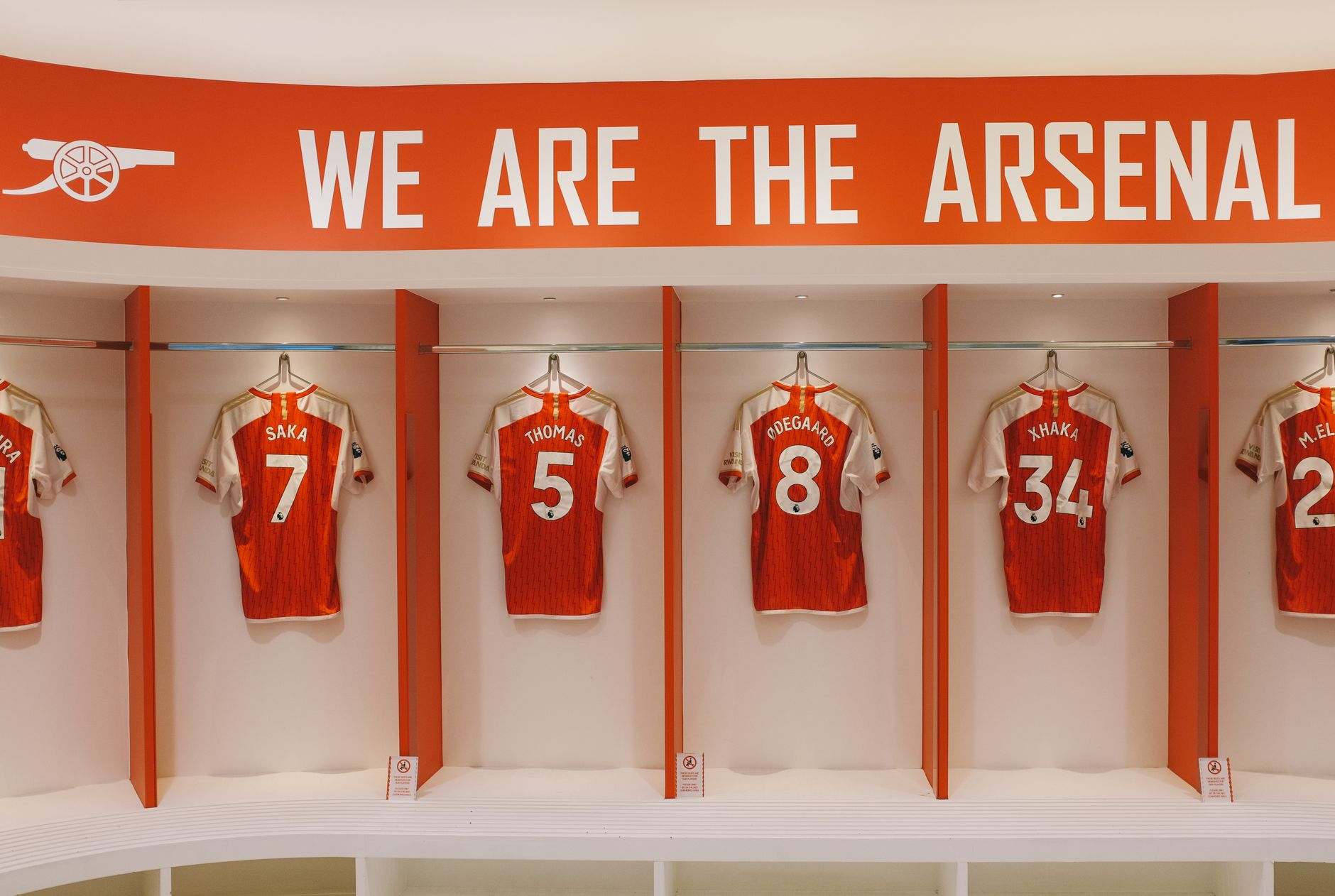
Photo by Huy Phan on Pexels
The title race is not a parade; it is a long calculation conducted beneath floodlights, in wet January air, while tired legs turn apparently simple passes into dangerous equations. One weekend can make a seven-point advantage feel like a fortress, then a single red card, hamstring injury, or late set piece can reduce that fortress to painted scenery. Football Insights follows this contest through match predictions, tactical patterns, player statistics, and the broader road toward the 2026 FIFA World Cup, giving supporters a disciplined way to separate momentum from evidence. The most useful question is not merely “Who is top?” but “Who is most likely to sustain title-winning performance over the final 16 matches?” That distinction matters to fans, analysts, and anyone assessing responsible football markets, because points, underlying numbers, schedule difficulty, and squad availability do not always tell the same story.
Want a clearer statistical starting point? Football Insights tracks the major storylines behind the standings.
Before 2025: How Did Premier League Title Contenders Work?
Before 2025, Premier League title contenders were generally identified through a familiar combination of league position, recent form, squad quality, and historical consistency. Manchester City’s sustained success under Pep Guardiola made them the market and analytical reference point, while Arsenal under Mikel Arteta developed into a serious challenger through controlled possession, aggressive pressing, defensive structure, and a growing set-piece threat. Liverpool, managed by Jürgen Klopp during the preceding era, established another model: relentless transitions, high-intensity pressing, and exceptional output from wide attackers. These teams demonstrated that a title challenge usually requires more than an impressive autumn; the champion must accumulate points when performances are imperfect.
The statistical era has refined that old logic. A club with 70 percent possession is not automatically dominant, and a team with a higher expected-goals total is not guaranteed three points. Analysts increasingly compare non-penalty xG, expected goals against, field tilt, shots on target, set-piece efficiency, and the quality of opponents faced. Premier League match data provides the basic competitive record, while FBref offers a wider statistical reference for historical comparison. The crucial lesson is probabilistic: if a side repeatedly creates high-quality chances and limits opponents, its expected points over a large sample should rise, even when one match ends 0–0.
A practical pre-2025 framework looked like this:
- Points pace: A contender generally needed a rate close to two points per game across the season.
- Defensive floor: Champions could survive occasional scoring droughts if they conceded rarely.
- Availability: Core players had to remain fit through winter congestion and European competition.
- Recovery ability: A title-winning team needed to respond after poor results rather than merely collect victories during easy stretches.
This framework still matters, but the 2026 race has introduced a more complicated texture. The leaders are not separating themselves through flawless attacking football, and several established powers are showing the cost of fixture congestion. As the UEFA Champions League calendar places additional demands on elite squads, the value of rotation becomes almost as important as the value of a superstar.
[Internal Link: Premier League title race statistics guide]
What Is the 2026 Shift in the Title Race?
The 2026 shift is the movement from a simple “best team versus nearest rival” narrative toward a wider contest shaped by congestion, chance quality, tactical adaptability, and uneven form among the leading clubs. Arsenal’s seven-point advantage after Matchweek 22 is significant, but it is not decisive because 16 matches remain and the leaders have already shown vulnerability in consecutive 0–0 draws against Liverpool and Nottingham Forest. Manchester City’s dropped points across four successive league matches have opened the door, while Liverpool’s four-match winless run has changed the expected shape of the chase.
The weekend’s symmetry was remarkable: none of the top four won, while none of the bottom five lost. That unusual pattern compressed the emotional drama without radically changing the mathematical landscape. Aston Villa, unbeaten at home since August before losing to a depleted Everton side, illustrated another principle: home advantage is real, but it is not an insurance policy. Manchester City’s tactical defeat at Old Trafford showed the same truth from a different angle, as a supposedly superior squad can be denied when an opponent disrupts its build-up and transition structure.
The strongest information gain comes from examining how Arsenal are winning. They have won 15 of 22 league matches, yet 11 of those victories began with a first goal from a dead-ball situation. Arsenal have won without such an opening only twice, against Brentford and Tottenham Hotspur. This is not automatically a weakness; set pieces are repeatable, coachable sources of value. However, it creates a measurable edge case: when opponents avoid needless fouls and defend corners effectively, Arsenal may need more open-play invention to preserve their expected points.
That is why Football Insights treats set-piece dependence as a variable rather than a verdict. A corner routine can rescue a title campaign, but no model should assume that every future match will reproduce the same conversion rate.
See the tactical evidence behind the contenders before assessing their chances.
What Changed for Players in the 2026 Premier League Title Race?
Players now operate inside a title race where fatigue and decision quality may matter as much as technical talent. Arsenal reached Nottingham Forest after only two days of rest, while Forest had enjoyed eight days to prepare. That seven-day recovery difference is not a decorative statistic; it affects pressing intensity, sprint repetition, defensive concentration, and the probability that a forward converts a half-chance. Arsenal created 2.1 xG but produced only 0.85 xG on target, a gap suggesting that the problem was execution and shot placement rather than total opportunity.
For Arsenal, Bukayo Saka remains central to chance creation, while Declan Rice has become an important delivery source from wide and set-piece positions. Matz Sels made the key save against Saka’s looping header, and Mikel Merino narrowly missed another Rice-created opportunity. Gabriel Martinelli and Viktor Gyökeres also had presentable first-half chances, yet Arsenal failed to register a shot on target before halftime. Those details matter because a goalless draw can hide a healthy attacking process, but repeated wastefulness eventually reduces the team’s points expectation.
Manchester City face a different player-level question. Their challenge is less about one isolated miss and more about whether opponents can repeatedly disrupt their positional structure. Pep Guardiola’s side must maintain control while managing the physical and mental cost of consecutive matches. Liverpool, meanwhile, need to turn possession and territorial pressure into goals after drawing with Burnley at Anfield. Aston Villa must prove that their home strength survives injuries and rotation, particularly after the defeat by Everton.
A useful player-impact checklist includes:
- Availability: Count starts, minutes, and recent injury absences rather than relying on reputation.
- Chance quality: Separate total shots from shots on target and non-penalty xG.
- Role stability: Note whether a midfielder is creating from his normal zone or covering defensive gaps.
- Rest advantage: Compare preparation days before judging a poor performance.
- Set-piece involvement: Track both delivery and first-contact responsibility.
This is where casual narratives often collapse. A striker who misses one chance is not necessarily declining; a team that wins several matches through corners is not necessarily lucky. The expected value comes from repeated patterns, and the sample must be large enough to survive the emotional storm of a single weekend.

Photo by Franco Monsalvo on Pexels
How Should We Rank the Premier League Title Contenders Now?
The most credible ranking should combine current points, performance indicators, schedule difficulty, squad depth, and tactical resilience rather than using table position alone. Arsenal deserve first place in the present-tense ranking because they lead by seven points after 22 games and have accumulated 15 victories, but Manchester City remain a dangerous second-tier probability because elite teams can reverse a poor run quickly. Liverpool’s four-match winless streak lowers their immediate momentum, while Aston Villa’s home record and recent loss create a more conditional case.
A practical ranking snapshot looks like this:
| Contender | Current signal | Main strength | Main uncertainty |
|---|---|---|---|
| Arsenal | Seven-point lead after 22 matches | Defensive control and set pieces | Open-play finishing |
| Manchester City | Points dropped in four straight league games | Tactical quality and squad depth | Vulnerability against disruptive pressing |
| Liverpool | Four-match league winless run | Anfield pressure and attacking talent | Converting control into goals |
| Aston Villa | Strong home run ended by Everton | Home performance and structure | Depth under congestion |
| Manchester United | Defeated Manchester City at Old Trafford | Ability to disrupt elite opponents | Sustaining consistency |
The ranking is not a betting instruction, and no table can eliminate uncertainty. The UK Gambling Commission states that gambling should be approached as entertainment rather than a guaranteed source of income; that principle applies especially when title markets encourage overconfidence. “Gambling is not a way to make money,” the regulator’s safer-gambling guidance makes clear. In practical terms, use a fixed entertainment budget, avoid chasing losses, and never treat a statistical edge as certainty.
A contrarian conclusion follows from the evidence: Arsenal’s biggest threat may not be Manchester City’s famous attacking ceiling, but Arsenal’s own conversion variance. If the leaders keep creating chances at 2.1 xG yet repeatedly finish far below that expectation, the seven-point margin can shrink without a tactical collapse. Conversely, if Saka, Martinelli, Gyökeres, and Merino convert ordinary opportunities at a normal rate, set-piece production could make Arsenal extremely difficult to catch.
[Internal Link: expected goals and football prediction methods]
Want to compare the contenders through a disciplined framework rather than headlines?
What Does This Mean for the Premier League Title Race Now?
The immediate implication is that Arsenal control the race, but they do not control every variable. Sixteen matches remain, and every additional fixture magnifies the influence of rest, injuries, European commitments, referee decisions, finishing variance, and the difficulty of upcoming opponents. Arsenal’s consecutive goalless draws against Liverpool and Nottingham Forest show that a lead can grow numerically while confidence becomes more complicated emotionally. The champions of memory often seemed inevitable in retrospect; in real time, they usually looked vulnerable at least once.
Manchester City’s position is dangerous because a team with Guardiola’s tactical resources can transform a four-match points drought into a long winning sequence. Yet City must first solve the specific problem shown at Old Trafford: how to maintain progression when Manchester United deny clean central access and attack the spaces left by advanced players. Liverpool need a similar correction after the Burnley draw, particularly in the final third. Their title probability cannot be estimated from historical reputation alone; the current four-match winless sequence must be included.
For supporters and analysts, the next phase should be monitored through five indicators:
- Arsenal’s open-play goals over the next five matches.
- Manchester City’s response in the first match after a league defeat.
- Liverpool’s shots on target and non-penalty xG at Anfield.
- Aston Villa’s results when rotation affects their strongest XI.
- The number of rest days separating each contender from its opponent.
The emotional temptation is to declare the race finished or reborn after every result. Resist it. A seven-point lead after 22 games is valuable, but its expected value depends on the remaining schedule and the leaders’ ability to convert promising attacks. Football Insights will continue linking match events to tactical causes, because the most memorable title races are not solved by one dramatic photograph; they are solved by hundreds of small probabilities accumulating until the final whistle.

Photo by Huy Phan on Pexels
Three Predictions for the Next Quarter
The next quarter of the season should reveal whether Arsenal’s lead represents durable superiority or merely a temporary advantage created by rivals’ inconsistency. My first prediction is that Arsenal will remain top after the next major block of fixtures, but their margin is more likely to narrow than expand. Consecutive 0–0 draws at Liverpool and Nottingham Forest exposed a scoring ceiling in matches where opponents block central areas, and a repeat of that pattern would allow Manchester City to recover ground quickly. Arsenal’s defensive floor gives them protection, yet the points gained from open play will determine whether their lead becomes mathematically commanding.
My second prediction is that Manchester City will improve their league results before the end of the next quarter. This is not blind faith in Guardiola; it is a regression-to-performance argument. A side capable of controlling possession, creating high-value attacks, and selecting from a deep squad is unlikely to remain indefinitely at a depressed points rate, although the Old Trafford defeat proves that tactical problems must be solved rather than ignored. The timing and quality of City’s response will matter more than one isolated victory.
My third prediction is that Liverpool will remain involved but require a clear attacking correction. Four consecutive league matches without a win have reduced their momentum, and an Anfield draw with Burnley is precisely the kind of result that changes a title forecast. If Liverpool increase shots on target and improve final-third conversion, they can return to the contest; if they continue producing territorial dominance without decisive finishing, Arsenal and Manchester City will gain separation. Aston Villa and Manchester United may influence individual results, but the title is most likely to remain a three-club calculation.
A sensible forecast table is therefore:
- Arsenal: Most likely current leader to retain first place, with finishing as the decisive risk.
- Manchester City: Best comeback candidate if their tactical response restores consistency.
- Liverpool: Strong enough to recover, but the four-match winless run demands immediate attacking evidence.
Before acting on any prediction, compare the next fixture list, injury reports, rest periods, and underlying numbers. The beautiful cruelty of football is that probability offers a map, never a passport.
Explore the latest 2026 match analysis before the next round reshapes the standings.
Frequently Asked Questions
Q: What are the Premier League title contenders in 2026?
Arsenal, Manchester City, Liverpool, and Aston Villa are the principal 2026 Premier League title contenders based on current position, squad quality, and recent competitive performance. Arsenal lead by seven points after 22 matches, while Manchester City remain the strongest potential comeback threat despite dropping points in four consecutive league games. Liverpool’s four-match winless run reduces their immediate probability, but does not remove them from the race. Aston Villa are a less secure challenger after losing at home to Everton.
Q: How are Premier League title contenders ranked?
Premier League title contenders should be ranked using points, remaining fixtures, expected goals, defensive performance, injuries, rest periods, and tactical adaptability. Table position provides the starting point, but it cannot explain why Arsenal created 2.1 xG against Nottingham Forest while producing only 0.85 xG on target. A stronger ranking combines results with process indicators and adjusts for opponent quality. This method avoids treating one dramatic win or loss as a complete season forecast.
Q: What is the difference between Arsenal and Manchester City in the 2026 title race?
Arsenal currently possess the clearer points advantage, while Manchester City offer the greater evidence of long-term tactical depth and recovery potential. Arsenal have won 15 of 22 league matches and rely heavily on defensive structure and dead-ball situations, with 11 victories beginning with a set-piece first goal. Manchester City have recently dropped points in four straight league matches and lost at Manchester United, but their squad and coaching quality make a rapid response plausible. The difference is therefore current control versus comeback capacity.
Q: How can I analyse the next Premier League title-contender matches?
Start by comparing each team’s last five results with non-penalty xG, shots on target, goals conceded, injuries, and preparation days. Then inspect the tactical matchup: pressing triggers, central access, set-piece defence, and the spaces created when full-backs advance. Finally, compare the opponent’s home or away record and avoid overvaluing a single result. Football Insights can support this process with match predictions, player statistics, and tactical coverage, but no analysis guarantees an outcome.
Q: Why might Arsenal lose their seven-point Premier League lead?
Arsenal could lose their lead if open-play finishing remains inefficient, key players miss matches, or fixture congestion reduces their pressing and attacking sharpness. Their 2.1 xG against Nottingham Forest produced only 0.85 xG on target, while consecutive 0–0 draws against Liverpool and Forest showed how opponents can frustrate them. Set pieces have helped Arsenal, but opponents may reduce that advantage by defending corners carefully and avoiding unnecessary fouls. Manchester City’s improvement would also increase the pressure.
Q: Is it safe to bet on Premier League title contenders?
Betting on Premier League title contenders is never risk-free, because injuries, late results, odds movement, and probability variance can overturn even a strong statistical assessment. Use only a fixed entertainment budget, never chase losses, and remember that a seven-point lead is not a guaranteed championship. The UK Gambling Commission advises treating gambling as entertainment rather than income. If gambling stops feeling controlled or enjoyable, stop and seek support through an appropriate responsible-gambling service.
Q: What should I monitor before the next title-race prediction?
Monitor Arsenal’s open-play scoring, Manchester City’s response after defeat, Liverpool’s shots on target, Aston Villa’s rotation options, and each contender’s rest advantage. These indicators reveal more than headlines because they connect performance to repeatable causes. Also check official team news, fixture congestion, and opponent strength before forming a view. A practical prediction should be updated when new evidence arrives rather than defended simply because an earlier forecast sounded confident.
The title race is still alive, still unstable, and gloriously resistant to easy prophecy. Arsenal have the arithmetic advantage; Manchester City possess the most obvious route back; Liverpool remain one attacking correction away from relevance, while Aston Villa and Manchester United can shape the race through individual results. Follow the evidence, keep probability in its proper place, and enjoy the old drama of a season that refuses to reveal its final line too soon.
Ready to follow every major 2026 title-race development?