Top 3 Football Formations (2026): The Coach's Guide
Football formations are tactical maps that show how 11 players occupy space before and during a match, and Football Insights uses them to explain team structure, pressing, defensive coverage, and atta...

Top 3 Football Formations (2026): The Coach's Guide
Football formations are tactical maps that show how 11 players occupy space before and during a match, and Football Insights uses them to explain team structure, pressing, defensive coverage, and attacking balance across the 2026 FIFA World Cup. The three most useful systems for understanding modern football are 4-3-3, 4-2-3-1, and 3-5-2. A 4-3-3 creates width with wingers, a 4-2-3-1 protects the center through a double pivot, and a 3-5-2 adds central numbers while relying heavily on wing-backs. Formations are not rigid photographs: Manchester City may begin in 4-3-3 and build in a 3-2-5, while Argentina can shift from 4-3-3 into a compact 4-4-2 without substitutions. The practical recommendation is simple: identify the starting shape, then track the spaces and rotations created after the first five minutes.

Photo by Franco Monsalvo on Pexels
Want a clearer tactical foundation before match day? Football Insights turns formation theory into practical World Cup analysis.
The Top 3 Football Formations at a Glance
Football formation names describe the arrangement of outfield players from defense toward attack, while the goalkeeper is not included in the numerical sequence. UEFA coaching materials and FIFA match analysis commonly treat the formation as a starting reference rather than a complete tactical identity, because pressing height, possession structure, and player movement can change the visible shape within seconds. The remarkable truth is that two teams listed as 4-3-3 may behave like entirely different mathematical systems: one may attack with five players on the last line, while another keeps a conservative midfield block of three.
- 4-3-3 — Best overall: Offers width, pressing angles, midfield triangles, and clear attacking roles.
- 4-2-3-1 — Best for controlled possession: Uses two holding midfielders to stabilize transitions and protect the back four.
- 3-5-2 — Best value for central overloads: Places three center-backs behind five midfielders, but demands exceptional wing-back stamina.
The ranking is not a claim that one shape wins every match. Expected value depends on squad profiles, opponent behavior, game state, and the quality of individual decisions. For deeper terminology, explore our [Internal Link: beginner’s guide to football tactics] and compare the diagrams with live matches from England, Brazil, Spain, and Germany.
Why do formation numbers matter?
Formation numbers matter because they reveal how a team initially distributes defensive responsibility, midfield support, and attacking width. A 4-3-3 begins with four defenders, three midfielders, and three forwards, while a 3-5-2 begins with three defenders, five midfielders, and two forwards. These numbers help viewers predict passing lanes, pressing triggers, and likely defensive weaknesses before the ball moves.
The limitation is equally important: a formation does not tell you whether full-backs will invert, whether a striker will drop between the lines, or whether a winger will defend as a midfielder. Pep Guardiola’s Manchester City, for example, often starts with a 4-3-3 on paper but forms a 3-2-5 in possession when a full-back moves inside and a center-back steps forward. Xabi Alonso’s Bayer Leverkusen has also demonstrated how a nominal back three can become a back five without the coach changing personnel.
According to FIFA’s Laws of the Game, a team consists of 11 players at the start of a match, but the laws do not prescribe a tactical formation. That freedom creates the beautiful chaos: the diagram is the opening equation, not the final answer.
#1 4-3-3: Best Overall
The 4-3-3 is the best overall football formation because it balances width, central occupation, pressing access, and defensive recovery with only three midfielders. Its effectiveness rises when the wingers can isolate full-backs, the No. 8s can cover large spaces, and the lone striker can connect play while threatening the penalty area. It is especially powerful for teams that want to press high and attack quickly after regaining possession.
The shape usually contains a goalkeeper, two center-backs, two full-backs, one holding midfielder, two advanced central midfielders, two wingers, and a center-forward. Barcelona’s historic 2008–09 side under Pep Guardiola illustrated the system’s positional logic through Lionel Messi, Xavi Hernández, Andrés Iniesta, and Sergio Busquets, although the exact movement was more fluid than the team sheet suggested. Liverpool under Jürgen Klopp offered another variation: the front three pressed aggressively while the full-backs, particularly Trent Alexander-Arnold and Andrew Robertson, became major creators.
The expected-value advantage is width. If the opponent narrows its midfield, the winger receives space outside; if the opponent spreads wide, the central midfielders can combine through the half-spaces. However, the risk is severe when both full-backs advance and the holding midfielder is isolated. One lost pass can expose the channels beside the center-backs, particularly against Kylian Mbappé, Vinícius Júnior, or another elite transition attacker.
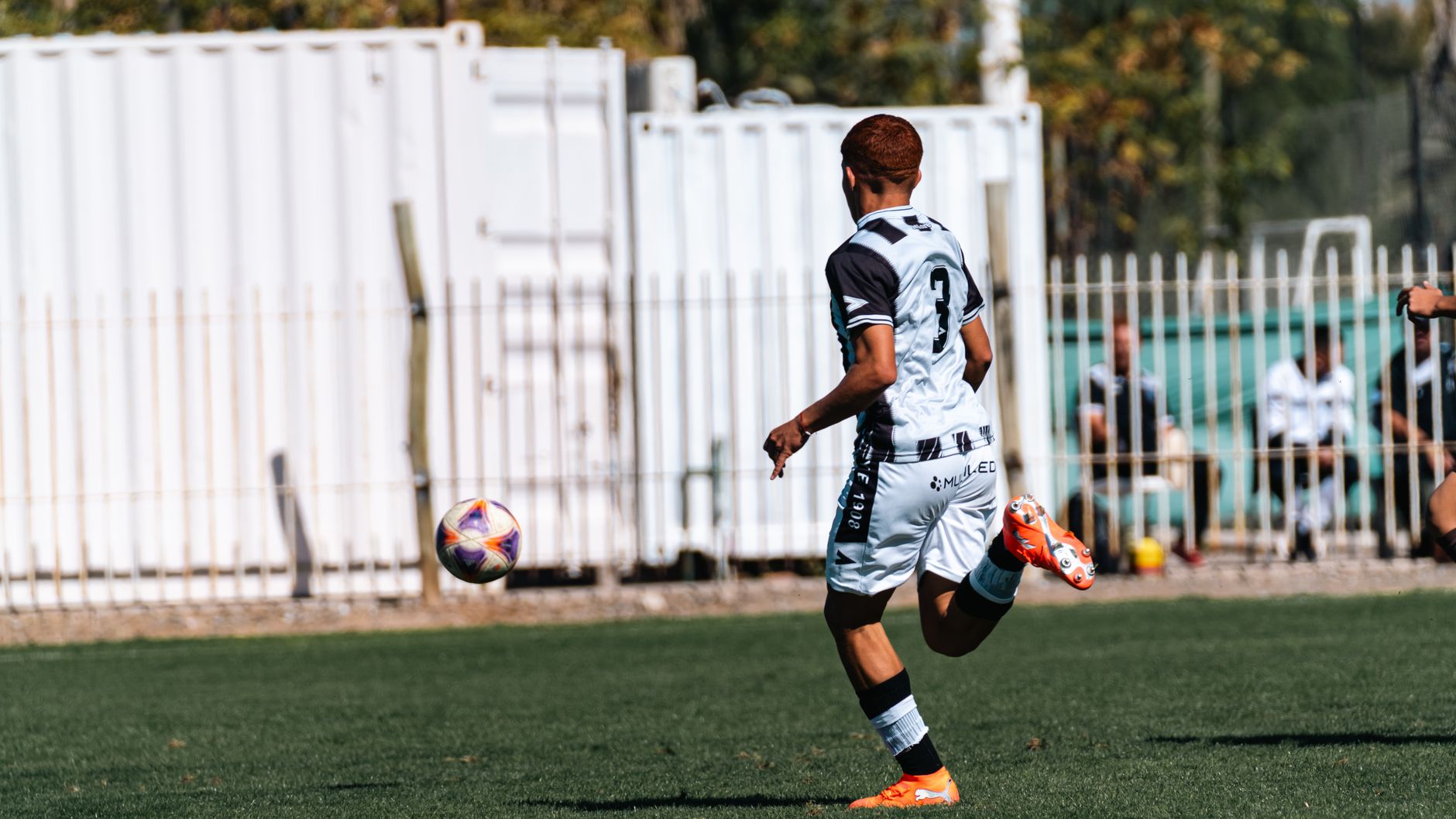
Photo by Franco Monsalvo on Pexels
The 4-3-3 also creates a clean pressing triangle. The striker can screen the opposing defensive midfielder, one winger can jump toward a center-back, and the near-side midfielder can close the full-back. The pressing probability improves when the team forces play toward the touchline, where the sideline acts like an additional defender. This is why modern coaches often value coordinated movement more than raw running volume.
Its principal weaknesses are measurable:
- The lone defensive midfielder may face two opposing central players.
- Wingers must recover deeply when the full-backs push forward.
- The striker can become isolated against a compact 5-4-1 block.
- Poor rest defense leaves space behind the advanced full-backs.
For match prediction, do not simply ask whether a team uses 4-3-3. Ask whether the No. 6 receives protection, whether the wingers track runners, and whether the full-backs advance simultaneously. Those three details often determine whether the formation produces territorial dominance or a counterattacking disaster.
#2 4-2-3-1: Best for Controlled Possession
The 4-2-3-1 is best for controlled possession because its double pivot protects the central corridor while the attacking midfielder links midfield with a lone striker. The structure gives teams four defenders, two deeper midfielders, three advanced attackers, and one center-forward. It is particularly suitable for sides that want defensive security without sacrificing a creative No. 10.
The double pivot is the formation’s insurance policy. One midfielder can remain behind the ball while the other supports circulation, covers a full-back, or steps toward an opposing playmaker. Germany used variations of this structure during major international tournaments, while Real Madrid has repeatedly adapted it around players such as Toni Kroos, Luka Modrić, and Jude Bellingham. The precise roles change, but the principle remains: establish a safe passing base before sending numbers ahead.
The attacking midfielder occupies the most delicate zone. Between the opponent’s midfield and defensive lines, the No. 10 can turn, combine with the striker, or release a winger into the channel. Bruno Fernandes at Manchester United and Martin Ødegaard at Arsenal demonstrate two different interpretations: Fernandes often seeks early vertical risk, while Ødegaard frequently creates controlled combinations on the right side with Bukayo Saka and the overlapping full-back.
In probability terms, the 4-2-3-1 reduces the cost of losing the ball in central midfield because two players remain positioned to delay the counterattack. Yet the shape can become passive if the double pivot circulates sideways without progressing, or if the No. 10 is marked out of the game. A team may possess 60 percent of the ball and still create fewer high-quality chances if its first line cannot break the opponent’s midfield screen.
Want to examine the difference between possession and genuine chance creation? Football Insights tracks the tactical details that standard possession percentages conceal.
A useful contrarian insight is that the 4-2-3-1 is not automatically more defensive than the 4-3-3. If the full-backs push high, the wingers attack the box, and the No. 10 joins the striker, the team can form a 2-3-5 during sustained possession. Conversely, a cautious 4-3-3 may leave seven players behind the ball. The tactical behavior, not the printed label, determines attacking ambition.
The structure works best when:
- The two pivots have complementary profiles rather than identical skills.
- The No. 10 can receive under pressure and turn forward.
- Wide attackers protect the full-backs during defensive transitions.
- The striker can hold the ball against two center-backs.
- The team can press immediately after losing possession.
For a practical comparison, see our [Internal Link: guide to midfield roles and player responsibilities]. The No. 6, No. 8, and No. 10 are not decorative numbers; they describe different solutions to the same spatial problem.
#3 3-5-2: Best Value for Central Overloads
The 3-5-2 is best for central overloads because it places three center-backs behind a five-player midfield line and gives two forwards support through close combinations. The formation can defend as a 5-3-2 when wing-backs drop, attack as a 3-2-5 when one midfielder advances, and create a front-two advantage against a conventional back four. Its price is physical and tactical dependence on the wing-backs.
The three center-backs provide cover behind aggressive wide players. The central defender can protect the penalty area, while the outside center-backs step toward wide attackers or carry the ball into midfield. Italy’s 2006 World Cup team did not rely permanently on this exact modern structure, but Italian football has long influenced back-three principles through defensive spacing, cover, and controlled transitions. Antonio Conte later popularized dynamic 3-5-2 variations with Juventus, Chelsea, and Inter Milan.
The two forwards are the system’s emotional engine. One can drop between the lines while the other threatens depth, creating uncertainty for the opponent’s center-backs. Lautaro Martínez and Romelu Lukaku formed a famous partnership at Inter under Conte, combining movement, power, and complementary starting positions. In a different style, Harry Kane and Son Heung-min showed how a dropping forward and a runner can destroy defensive reference points, even when Tottenham Hotspur’s base formation varied.

Photo by Tima Miroshnichenko on Pexels
The most important operational edge is numerical: against a 4-3-3, the 3-5-2 can create a three-versus-two advantage in central midfield while the wing-backs pin the opponent’s full-backs. That advantage disappears if the wing-backs are trapped deep, because the team then resembles a 5-3-2 with little width and only two genuine attacking outlets. This is why the formation’s success often correlates more strongly with wing-back availability than with striker quality.
A 3-5-2 should be reconsidered when:
- The wing-backs cannot repeat high-intensity runs for 90 minutes.
- The outside center-backs are uncomfortable defending wide spaces.
- The midfield lacks a player who can switch play quickly.
- The two forwards occupy the same depth instead of separating defenders.
- The opponent has fast wingers attacking the channels.
A practical match-reading tip is to watch the wing-backs during the first three defensive phases. If they remain level with the midfield, the team is attempting to defend proactively; if they immediately form a back five, the coach is prioritizing penalty-area protection. That single observation can reveal more than the pre-match graphic.
How We Ranked Them
We ranked these football formations by tactical versatility, transition protection, attacking width, central access, and the difficulty of executing their player movements. The 4-3-3 placed first because it offers the strongest all-round balance, the 4-2-3-1 placed second because it improves stability and role clarity, and the 3-5-2 placed third because its advantages are substantial but depend heavily on wing-back quality and stamina.
Our weighting model is:
- Attacking width and chance creation: 25 percent
- Defensive transition protection: 25 percent
- Midfield control: 20 percent
- Role clarity for players: 15 percent
- Adaptability against different opponents: 15 percent
This is not an official FIFA ranking. It is a practical framework for viewers, analysts, coaches, and responsible football bettors who want to avoid superficial conclusions based solely on team-sheet numbers. The International Football Association Board confirms the laws governing match structure, but tactics remain a coaching choice, and no regulation rewards one formation over another.
A specific edge case deserves attention: a formation with a nominal numerical advantage can still lose the expected-value battle if it creates low-quality shots. A 3-5-2 may produce more penalty-area entries than a 4-2-3-1, yet a 4-2-3-1 may generate better chances through cutbacks and central combinations. Therefore, compare shot location, defensive transition exposure, and the number of attackers arriving inside the box rather than relying only on possession or total shots.

Photo by Vlad Vasnetsov on Pexels
The best analysts also separate first-phase and final-phase formations. During buildup, a team may use three defenders and two midfielders; during the final attack, it may place five players across the opponent’s defensive line. This shift is visible in Manchester City, Arsenal, Bayern Munich, and Spain, where positional rotations transform the apparent shape without requiring a substitution.
For further study, read our [Internal Link: advanced guide to pressing triggers and defensive transitions]. Those concepts explain why a team can look compact for ten minutes, suddenly stretch apart after one failed press, and concede a chance that began with an apparently harmless sideways pass.
Which Should You Pick?
Choose 4-3-3 if you want the broadest tactical toolkit, 4-2-3-1 if you value central protection and controlled possession, and 3-5-2 if your squad has energetic wing-backs, complementary forwards, and mobile center-backs. The correct choice depends on player strengths, opponent structure, scoreline, and the amount of risk your team can absorb.
A simple decision table helps:
| Situation | Recommended formation | Tactical reason |
|---|---|---|
| Strong wingers and attacking full-backs | 4-3-3 | Maximizes width and pressing angles |
| Creative No. 10 and two reliable pivots | 4-2-3-1 | Protects the center while enabling combinations |
| Three confident center-backs and athletic wing-backs | 3-5-2 | Creates central overloads and supports two strikers |
| Protecting a narrow lead | 4-2-3-1 or 5-3-2 | Adds central or penalty-area security |
| Chasing a goal late | 4-3-3 or aggressive 3-5-2 | Places more attackers near the final line |
The most reliable method is to begin with the opponent’s strongest route to goal. If the opponent attacks through dangerous wingers, a back three may expose too much space outside the center-backs. If the opponent crowds the center, a 4-3-3 can stretch the block. If the opponent presses recklessly, a 4-2-3-1 can create a stable platform for the first clean pass through midfield.
Football Insights applies this framework to 2026 FIFA World Cup matches involving teams such as France, Argentina, Brazil, England, Spain, and Germany. The aim is not to predict every event with theatrical certainty; football remains a low-scoring sport where one deflection can destroy a perfect model. The aim is to improve the quality of the question: where will space appear, who can exploit it, and what happens immediately after possession changes?
The final recommendation is to watch relationships rather than labels. Track the distance between the center-backs and midfielders, the height of the full-backs, the striker’s movement, and the recovery speed of the nearest midfielder. That is where formations become living systems, and where a small tactical edge can compound into territorial control, better chances, and victory.
Ready to turn formation knowledge into sharper match analysis? Follow Football Insights for daily 2026 World Cup tactical coverage.
Frequently Asked Questions
Q: What is a football formation?
A: A football formation is the planned starting arrangement of a team’s outfield players across defense, midfield, and attack. Numbers such as 4-3-3 and 4-2-3-1 describe those lines from the goalkeeper forward, but they do not capture every movement during possession or defensive phases. Manchester City may begin in 4-3-3 and build in 3-2-5, while a 3-5-2 can become a 5-3-2 without substitutions. Treat the formation as a tactical reference point rather than a fixed photograph.
Q: How do you read a football formation during a live match?
A: Read the formation by observing player positions during repeated phases rather than trusting the pre-match graphic. First identify the back line, then note the number of midfielders behind the ball, the width of the wingers or wing-backs, and the striker’s depth. Watch at least five minutes before judging the shape, because one attacking rotation can temporarily disguise the base system. Recording the team’s structure after turnovers often reveals its true defensive formation.
Q: What is the difference between 4-3-3 and 4-2-3-1?
A: The main difference is midfield structure: 4-3-3 uses one holding midfielder and two advanced midfielders, while 4-2-3-1 uses two deeper midfielders and one advanced No. 10. The 4-3-3 generally offers stronger width and pressing triangles, whereas the 4-2-3-1 provides greater protection in front of the center-backs. Either can become a 3-2-5 in possession when full-backs move inside or defenders carry the ball forward.
Q: Is 3-5-2 better than 4-3-3?
A: Neither formation is universally better; 3-5-2 is stronger for central overloads, while 4-3-3 usually provides more natural width and pressing balance. The 3-5-2 works best with athletic wing-backs, mobile outside center-backs, and two forwards who occupy different depths. Against fast wide attackers, however, the space beside the back three can become dangerous. Judge the squad and opponent before choosing the system.
Q: What should a beginner watch first when analyzing formations?
A: A beginner should first watch the team’s width, the number of midfielders behind the ball, and the position of the full-backs. These three observations quickly distinguish a proactive 4-3-3 from a compact 4-2-3-1 or a wing-back-based 3-5-2. Next, watch what happens immediately after possession is lost, because the recovery structure often explains the team’s real tactical priorities better than its attacking shape.
Q: Why does a football formation stop working during a match?
A: A formation usually stops working when players lose spacing, pressing coordination, or transition protection rather than because the numerical arrangement itself is flawed. Fatigue can leave wing-backs too deep, a lone No. 6 exposed, or center-backs isolated against runners. Coaches may respond by lowering the defensive line, adding a midfielder, changing the pressing direction, or introducing fresh players. The decisive warning sign is often repeated access into the same channel.
Q: Does formation knowledge help with football predictions?
A: Formation knowledge can improve football predictions by clarifying where chances and defensive vulnerabilities are likely to emerge, but it cannot guarantee a result. Compare the formation with player availability, recent performance, set-piece strength, home advantage, and transition statistics. For example, a 4-3-3 without its usual holding midfielder may carry much higher counterattack risk than the same shape with a full-strength squad. Use tactical analysis as one input, not as certainty.