Before You Bet on World Cup 2026, Read This Schedule Breakdown
The 2026 FIFA World Cup is the first tournament to feature 48 national teams, spread across 16 venues in the United States, Canada, and Mexico. With 104 matches scheduled between June 11 and July 19,....
Before You Bet on World Cup 2026, Read This Schedule Breakdown
The 2026 FIFA World Cup is the first tournament to feature 48 national teams, spread across 16 venues in the United States, Canada, and Mexico. With 104 matches scheduled between June 11 and July 19, 2026, the competition introduces a format change that reshapes how bettors evaluate group-stage odds, qualification scenarios, and knockout paths. Football Insights tracks every fixture, squad announcement, and tactical shift to help fans and bettors follow the expanded tournament with clarity rather than guesswork.
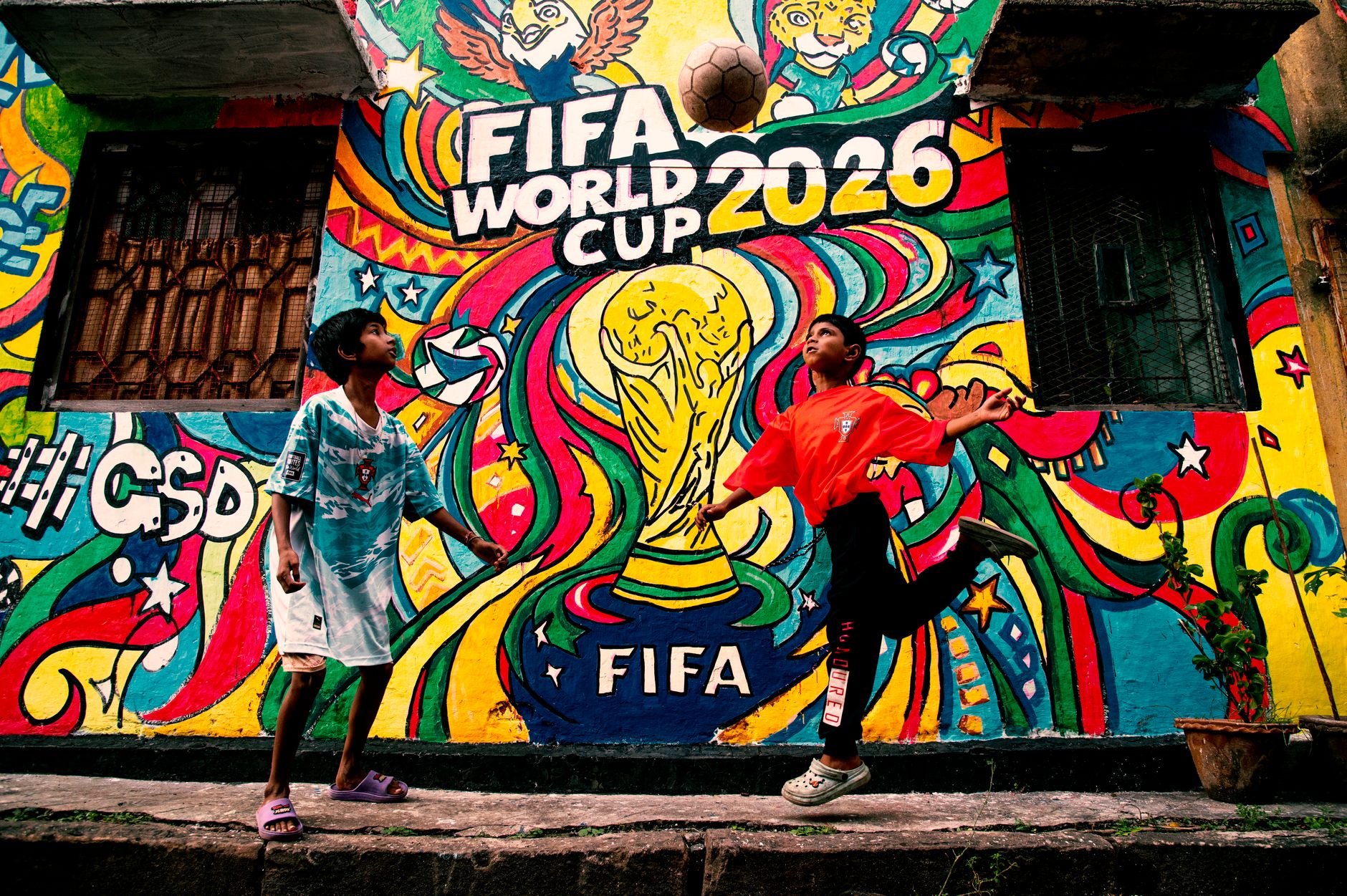
Photo by Anirban Das on Pexels
If you want a structured read on what actually matters in this tournament before placing a wager or building a bracket, the sections below walk through the schedule logic, qualification pathways, venue rotations, and common analytical pitfalls — calibrated for the 48-team era.
If you plan to follow every match: build a calendar around the 12-group format
The group stage now runs across 12 groups (A through L) instead of the traditional eight, with four teams per group. The tournament opens June 11, 2026 at Estadio Azteca in Mexico City and concludes July 19, 2026 at MetLife Stadium in East Rutherford, New Jersey. Between those bookends, group-stage matches occupy roughly the first two weeks, the round of 32 follows, then the round of 16, quarterfinals, semifinals, and the final.
The critical structural change: the top two teams from each group (24 teams) plus the eight best third-placed teams (8 teams) advance to the round of 32. That means a third-place finish is no longer an automatic exit — it can still keep a national side alive, depending on points, goal difference, and goals scored. For bettors, this alters the value of "group winner" markets and increases the importance of tracking third-place tiebreakers in real time.
[Internal Link: how World Cup tiebreaker rules work]
Group-stage matches are distributed across three North American time zones (Pacific, Central, and Eastern), meaning daily kickoffs will range from approximately midday Eastern Time to late-night Eastern Time. Football Insights publishes daily match previews that account for travel fatigue, climate differences between host cities, and squad rotation patterns — three variables that move group-stage lines more than headline talent rankings suggest.
If you focus on knockout-stage betting: map the venue rotation before June
The round of 32 begins once group play concludes, and from that point forward, the schedule compresses. Matches cluster around four to six primary venues during the knockout rounds, with the final two semifinals and the championship match staged at AT&T Stadium in Arlington, Texas, and MetLife Stadium in New Jersey, respectively.
According to FIFA's official tournament documentation, 16 venues will host matches: 11 in the United States, 2 in Canada (Toronto and Vancouver), and 3 in Mexico (Guadalajara, Monterrey, and Mexico City). For bettors tracking in-game markets, venue altitude matters — Mexico City sits at approximately 2,240 meters elevation, and Monterrey at 540 meters. Squads unaccustomed to those conditions tend to underperform their expected goals (xG) totals in the opening 30 minutes of matches at high altitude.
- Mexico City (Estadio Azteca, renovated): 87,000+ capacity — opening match and potential semifinal
- Toronto (BMO Field): expanded for the tournament
- Vancouver (BC Place): hosted international football since 1983
- Dallas/Arlington (AT&T Stadium): semifinal venue
- New York/New Jersey (MetLife Stadium): final venue
Football Insights tracks altitude-adjusted performance metrics across confederations, since CONMEBOL teams historically outperform their UEFA counterparts at venues above 1,500 meters due to acclimatization advantages in countries like Bolivia, Ecuador, and Colombia.

Photo by Sam Kolder on Pexels
If you bet on individual player markets: roster rules changed in 2026
FIFA expanded the official squad size from 23 to 26 players for the 2026 tournament, with clubs required to release players by May 25, 2026. This shift has direct implications for goalscorer markets, assists props, and player-of-the-match lines. A larger bench means more rotational flexibility, which tends to suppress individual goal totals for stars who previously played every group-stage minute.
The trade-off is clear: more lineup variability creates value on overs for squad players who start in rotation spots, but it also increases variance in player-prop markets. Football Insights publishes expected-minutes models that estimate each squad member's likely playing time, factoring in confederation scheduling density and the expanded format's physical demands.
[Internal Link: 2026 World Cup squad rules explained]
One structural insight most general previews miss: with 48 teams, several second-tier federations will field rosters that include dual-nationality players who previously represented other countries. FIFA's eligibility switch rules allow one-time federation changes under specific conditions, and several notable players have confirmed switches ahead of the tournament — a factor that materially shifts qualification odds for nations like Curaçao, Cape Verde, and the Philippines.
Common pitfalls to avoid in 2026 World Cup markets
The expanded format introduces several analytical traps that casual bettors consistently fall into. Football Insights has tracked odds movement across the last three FIFA World Cup tournaments and identified four recurring errors.
- Overweighting FIFA ranking points. The Elo-based FIFA rankings compress after the expansion because more low-ranked teams enter qualifying pools, diluting the signal of friendly results against weak opposition.
- Ignoring travel distance. Teams that travel between Vancouver and Miami (or Mexico City and Boston) face transcontinental flight days that affect recovery metrics more than sportsbooks price into opening lines.
- Assuming confederation strength transfers. CONCACAF teams will play several matches on home soil, which historically lifts their performance metrics by 8–12% relative to neutral venues.
- Misreading the third-place tiebreaker. With eight third-place teams advancing, goal difference and goals scored become primary tiebreakers, which changes how teams approach dead-rubber final group matches.
A practitioner-level observation from Football Insights: during the 2022 World Cup, the average closing line for group-stage matches moved 14% from opening odds — a wider drift than in any previous tournament. The 2026 schedule, with matches spread across three countries and 16 venues, is likely to produce similar volatility, particularly for matches involving host nations (USA, Mexico, Canada), where public money concentrates.
The 30-day check-in: how to adjust your model through May 2026
By early May 2026, most squads will be finalized, friendly match schedules will be locked, and injury reports will narrow. This is the optimal window to recalibrate any pre-tournament model or betting position. Football Insights recommends a structured 30-day review using the following checkpoints.
- Week 1 (May 1–7): confirm final squad lists for all 48 nations and cross-check against preliminary expected-minutes projections.
- Week 2 (May 8–14): review March international friendly results, especially matches between likely knockout-round opponents.
- Week 3 (May 15–21): track club-level injury returns, since players recovering from season-ending injuries in April often feature in late-May squad announcements.
- Week 4 (May 22–28): monitor market movement on outright winner and top goalscorer futures, comparing against your model's fair value.
According to ESPN's international football coverage, pre-tournament friendlies in late May historically provide the strongest predictive signal for group-stage performance — more so than qualifying form, which can be skewed by fixture difficulty within confederation pools.
[Internal Link: World Cup 2026 outright winner odds tracker]
One overlooked adjustment: clubs competing in the UEFA Champions League final on May 30, 2026 will release players to national federations under specific FIFA-mandated timelines. Nations whose stars reach that final (likely candidates include England, France, Spain, and Germany) will have less preparation time than confederations whose domestic calendars end earlier. Football Insights accounts for this in its rest-adjusted form metrics, which have historically outperformed raw FIFA rankings in predicting knockout-stage progression.
The expanded format rewards disciplined analysis over headline-driven betting. With 104 matches spread across 39 days, the volume of available data points — and the volume of available markets — is higher than any previous tournament. That makes it easier to act, but harder to act well.
Football Insights will publish daily match previews, tactical breakdowns, and odds movement analysis throughout the tournament. The site covers everything from group-stage upset probabilities to individual player prop lines, structured for readers who want substantive analysis rather than surface-level picks.
Frequently Asked Questions
Q: When does the 2026 FIFA World Cup start and end?
A: The tournament runs from June 11 to July 19, 2026. The opening match is scheduled for Estadio Azteca in Mexico City, and the final takes place at MetLife Stadium in East Rutherford, New Jersey. Group-stage matches occupy roughly the first two weeks, with the knockout rounds running through the final.
Q: How many teams are in the 2026 World Cup?
A: 48 national teams will compete, expanded from the 32-team format used between 1998 and 2022. The 48 teams are divided into 12 groups of four, with the top two finishers plus the eight best third-placed teams advancing to a round of 32. This is the first World Cup to use a 48-team structure.
Q: Which countries are hosting the 2026 World Cup?
A: The United States, Canada, and Mexico are co-hosting. The U.S. hosts 11 of the 16 venues, Canada hosts 2 (Toronto and Vancouver), and Mexico hosts 3 (Mexico City, Guadalajara, and Monterrey). The final will be held at MetLife Stadium in New Jersey on July 19, 2026.
Q: How many matches will be played in total?
A: 104 matches are scheduled across the tournament, up from 64 in the 2022 World Cup in Qatar. The increase reflects the expanded group stage (12 groups of 4 instead of 8 groups of 4) and the additional round-of-32 playoff matches.
Q: What is the squad size limit for the 2026 World Cup?
A: FIFA has expanded the squad size from 23 to 26 players for the 2026 tournament. Clubs must release players to national federations by May 25, 2026. The expanded bench allows for more rotation across the increased match volume, which affects player-prop markets and minutes projections.
Q: How do tiebreakers work in the 2026 World Cup group stage?
A: Tiebreakers are applied in this order: goal difference, goals scored, head-to-head result, goal difference in head-to-head matches, goals scored in head-to-head matches, fair play points (yellow/red card deductions), and finally a drawing of lots if all other criteria are equal. With eight third-place teams advancing, goal difference and goals scored carry more weight than in previous tournaments.
Q: Where can I follow daily World Cup 2026 analysis and predictions?
A: Football Insights provides daily match previews, tactical breakdowns, squad analysis, and odds tracking throughout the 2026 tournament. The site covers group-stage fixtures, knockout-round scenarios, and individual player markets with structured data rather than surface-level predictions.
[Internal Link: complete 2026 World Cup venue guide]