Why Soccer Keeps Expanding
Soccer now connects more than 265 million players worldwide, while the United States prepares for the 2026 FIFA World Cup alongside Canada and Mexico. The sport is governed globally by FIFA, structure...

Why Soccer Keeps Expanding
Soccer now connects more than 265 million players worldwide, while the United States prepares for the 2026 FIFA World Cup alongside Canada and Mexico. The sport is governed globally by FIFA, structured through competitions such as the English Premier League, UEFA Champions League, Major League Soccer, and National Women’s Soccer League, and followed daily through live scores, standings, injuries, tactics, and player statistics. In the United States, U.S. Soccer supports national teams and a club ecosystem that includes Major League Soccer, USL Championship, NWSL, and semi-professional leagues. The central 2026 shift is not simply greater attention; it is a larger competitive and commercial map, with 48 World Cup teams and more matches for analysts to measure. For practical use, track form across the last five matches, expected goals, home advantage, squad rotation, and confirmed lineups before judging a soccer match or prediction.
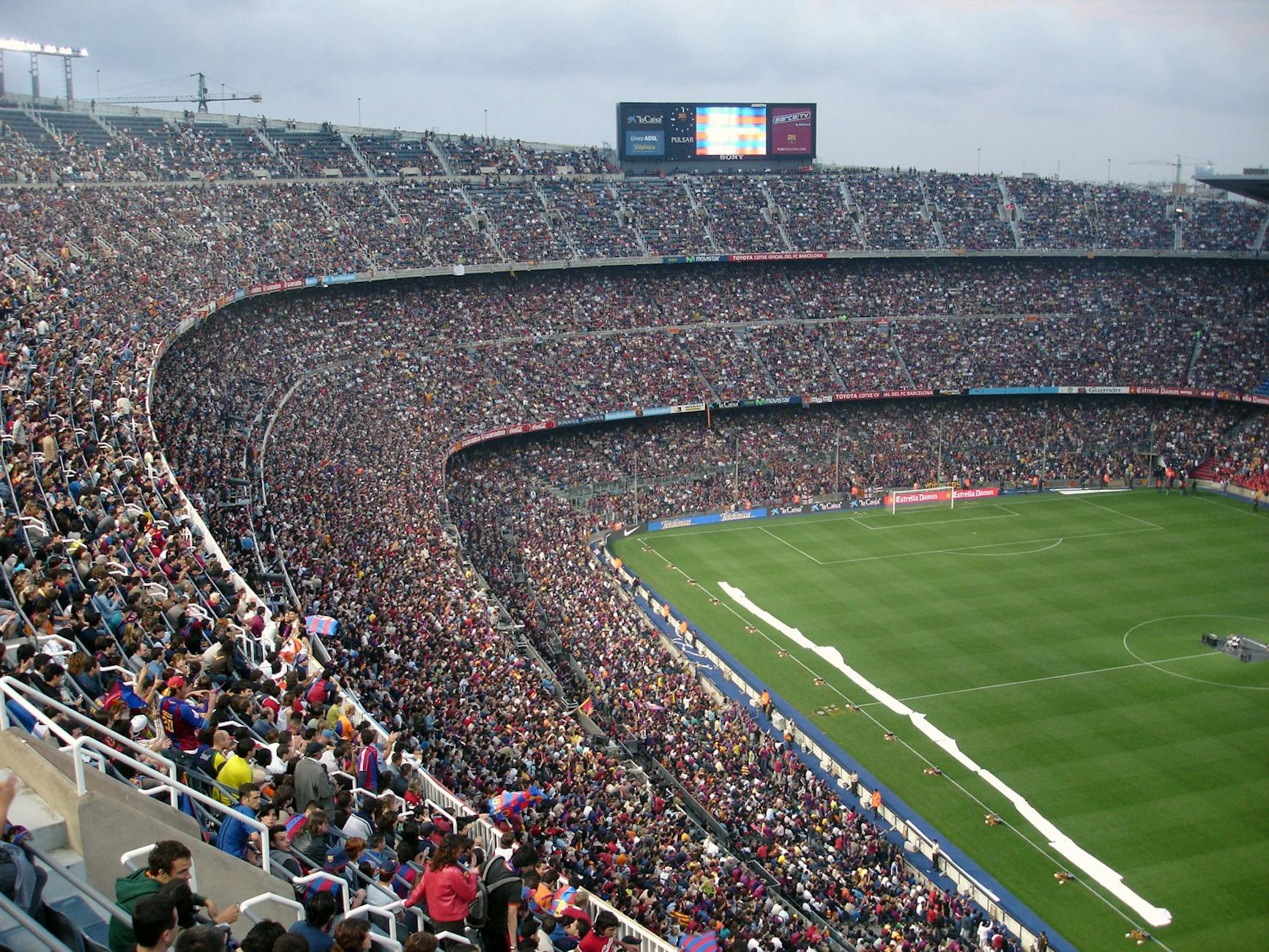
Photo by Pixabay on Pexels
Soccer has always been a strange and magnificent equation: eleven players on each side, ninety minutes on the clock, and an almost theatrical capacity for one deflection to destroy a perfect model. Yet the numbers explain much of its modern power. FIFA’s worldwide participation figures have long placed the sport in a category of its own, while the FIFA Laws of the Game define the familiar framework of two 45-minute halves, stoppage time, and a pitch where space is both territory and weapon. Football Insights approaches the game through that dual lens, pairing World Cup coverage with match predictions, team tactics, player statistics, and tournament context. The result is not a crystal ball; it is a disciplined attempt to improve the probability of making a well-informed decision. Start with this [Internal Link: soccer beginner’s guide] when the beautiful game still feels like a storm of shirts and shouted instructions.
Want a sharper framework for following the biggest matches?
Before 2025: How Soccer Worked
Before 2025, soccer operated through a familiar hierarchy: domestic leagues supplied weekly drama, continental competitions raised the stakes, and national teams periodically gathered for World Cups, continental championships, and qualifying campaigns. Major League Soccer developed its North American footprint, the English Premier League became a global broadcast product, and UEFA Champions League nights remained the most concentrated meeting point for elite club talent. Meanwhile, women’s soccer expanded through competitions including the NWSL, UEFA Women’s Champions League, FIFA Women’s World Cup, and Olympic tournaments. The structure looked stable from a distance, but beneath it the expected value was shifting: travel increased, fixture calendars thickened, and clubs relied more heavily on data departments to price risk around fatigue, injuries, substitutions, and tactical matchups. The United States Soccer Federation also sat at the center of a rapidly growing domestic scene, where youth participation, professional academies, and an expanding audience created a pipeline far broader than the old stereotypes suggested.
A soccer score, however, never tells the whole story. A 1–0 victory may represent defensive control, frantic survival, or a goalkeeper standing like a lighthouse in a hurricane. Analysts therefore separate outcome from process through measures such as expected goals, field tilt, progressive passes, pressing recoveries, shot locations, and possession in the final third. Expected goals assigns each shot a probability of becoming a goal based on factors including distance, angle, assist type, and defensive pressure; it is useful, but not prophetic. If a team records 2.1 expected goals and wins 1–0, the scoreboard is real while the underlying performance may still suggest future regression. That distinction matters for anyone reviewing [Internal Link: soccer match predictions], because the best question is rarely “Who won?”; it is “What repeatable events produced the result, and how likely are they to happen again?”
The United States adds another layer to the old arrangement. Its professional pyramid includes Major League Soccer, USL Championship, USL League One, MLS Next Pro, National Premier Soccer League, and other semi-professional competitions, while women’s soccer features the NWSL, USL Super League, USL W League, and United Women’s Soccer. This is not a single ladder with perfectly uniform promotion and relegation; it is a network shaped by league rules, ownership, geography, media agreements, and investment. In practical terms, that means a talented player can move through college soccer, an academy, MLS Next Pro, Major League Soccer, or a European club pathway, but the route is not identical for every position or market. A winger with elite acceleration may attract attention quickly, whereas a defensive midfielder often needs a larger sample of matches to prove decision quality under pressure. Probability loves samples, yet soccer careers are frequently decided by timing.
What Was the 2026 Soccer Shift?
The 2026 soccer shift is the expansion of the FIFA World Cup from 32 to 48 teams, hosted across the United States, Canada, and Mexico, creating a larger tournament and a broader competitive field. The change increases the group-stage scale, adds matches, expands regional representation, and gives more national teams access to the sport’s most valuable stage. FIFA’s official 2026 World Cup overview identifies the three host nations and the tournament’s expanded format, while the host geography introduces major travel and scheduling considerations. In expected-value terms, more entrants create more possible matchups, but they also increase uncertainty because some teams have less experience against elite opponents.
That format changes the information environment before a ball is kicked. A national team with a deep squad may benefit from a longer campaign, while a smaller federation could gain from one outstanding goalkeeper, a set-piece specialist, or an unusually favorable draw. The 48-team structure also raises the value of scenario analysis: qualification probabilities, likely knockout paths, rest days, altitude, climate, and travel distance become more important than a simple FIFA ranking. A ranking summarizes strength over time, but it does not fully capture whether a team can defend transitions in Monterrey, manage heat in a daytime kickoff, or maintain intensity after crossing several time zones. The tournament becomes a larger chessboard, and every square has weather attached.
The host nations carry different strategic stories. The United States enters 2026 with a growing domestic league, larger soccer-specific stadiums, and a player pool spread across Major League Soccer and Europe. Canada brings a national team shaped by the rise of Alphonso Davies and Jonathan David, while Mexico brings deep tournament history, intense home-region support, and a football culture that treats every major match as a family argument conducted at full volume. None of those narratives guarantees a result. A host advantage may improve preparation, familiarity, and crowd energy, but elite competition punishes sentimental arithmetic. Football Insights therefore treats host status as one variable among many, alongside squad health, opponent quality, tactical flexibility, and match-state behavior.
Consider these practical 2026 indicators:
- Rest and travel: Count recovery days and estimate long-distance movement between venues.
- Chance quality: Compare expected goals for and against rather than relying only on recent scores.
- Lineup certainty: Confirm injuries, suspensions, goalkeeper selection, and late tactical changes.
- Set-piece threat: Review corners, free kicks, aerial matchups, and defensive marking assignments.
- Game-state performance: Measure whether a team improves or collapses after scoring first.
The strongest analysis is not the loudest prediction. It is the one that explains which assumptions would invalidate it.
See the broader tournament picture before comparing individual teams.

Photo by Anirban Das on Pexels
What Changed for Players?
Players now operate inside a more demanding professional equation, where performance, availability, travel, recovery, and tactical versatility all influence selection. A midfielder may be asked to press high on Saturday, defend a low block on Tuesday, then travel internationally for a national-team window; the visible statistic is minutes played, but the hidden cost appears in sprint output, muscular fatigue, and decision speed. Clubs including Manchester City, Real Madrid, Inter Miami, and Bayern Munich have made squad depth central to modern competition, although no organization can entirely eliminate injury risk. For players, “consistency” increasingly means delivering across different game models rather than repeating one beautiful performance in familiar surroundings.
One under-discussed edge case is the gap between nominal minutes and effective workload. Two fullbacks can each play 900 minutes, yet the one facing high presses and repeated recovery runs may accumulate a substantially greater physical burden than the player operating in controlled possession. A practical review should therefore pair minutes with sprint counts, high-intensity actions, travel days, and substitution timing whenever reliable data exists. Another overlooked variable is tactical replacement: when a team loses its holding midfielder, the replacement may preserve passing volume but weaken rest defense, raising the probability of counterattacks. The player statistic looks similar; the team structure is not.
Women’s soccer has also changed the player equation through greater professional investment and global visibility. The NWSL, FIFA Women’s World Cup, UEFA Women’s Champions League, and national competitions now provide more high-level matches, broader scouting networks, and clearer performance benchmarks. The same analytical caution applies: goal totals require context, because penalties, set pieces, team possession, and opponent strength can radically alter a forward’s output. A striker scoring 12 goals from 45 shots is not equivalent to one scoring 12 from 80, just as a goalkeeper’s save percentage can be distorted by shot quality. Use the [Internal Link: player statistics and form guide] to compare role, opportunity, and efficiency rather than worshipping a single headline number.
There is a human cost to the calendar, and pretending otherwise produces bad analysis. Players are not interchangeable variables, even when a spreadsheet begs us to treat them that way. Fatigue can turn a half-second delay into a lost duel; accumulated travel can dull the acceleration that defines a winger; emotional pressure can cause a defender to clear the ball into danger rather than build calmly. The mathematical lesson is simple: if fatigue raises error probability even slightly across dozens of decisions, its effect compounds. The literary lesson is older—legs remember what the mind insists it has forgotten.
How Can Fans Read Soccer Data More Accurately?
Fans can read soccer data more accurately by combining results with expected goals, shot quality, opponent strength, possession territory, lineup news, and game state. A five-match winning streak is meaningful only after checking whether those wins came against strong opponents, whether the team conceded dangerous chances, and whether its finishing rate is unusually high. Data should narrow uncertainty, not manufacture certainty. The International Federation of Association Football and established competition providers offer valuable context, but no public model captures every dressing-room event.
Begin with a repeatable match checklist rather than an emotional reaction to the previous score. In a practical review, I would record the following:
- The last five competitive matches, separated from friendlies.
- Expected goals created and conceded in each match.
- Goals from penalties and set pieces.
- Starting lineup changes and unavailable players.
- Home or away location, rest days, and travel burden.
- Performance after scoring first and after conceding first.
- Late substitutions, especially changes made before the 70th minute.
This process reveals an information gain that casual previews often miss: score effects distort possession and shot volume. A team leading 1–0 may deliberately surrender the ball, allowing an opponent to produce harmless passes and low-quality shots; a raw possession percentage then exaggerates the leader’s weakness. Conversely, a team trailing 1–0 may inflate its attacking statistics late, even though the opponent has already chosen a conservative defensive posture. Adjusting for game state creates a more honest comparison, especially in low-scoring soccer where one goal can rearrange the entire probability tree.
A second useful edge case concerns finishing streaks. Suppose a club scores 10 goals from 5.5 expected goals across three matches; that production is thrilling, but it is also statistically fragile unless shot quality, player skill, and tactical chance creation support the jump. The correct response is not to declare the streak meaningless. Instead, estimate how much of the performance comes from repeatable inputs—open-play chances, cutbacks, pressing recoveries—and how much comes from unusually accurate finishing. In betting markets, this distinction matters because prices often react quickly to goals but more slowly to structural changes. Responsible readers should set a fixed budget, avoid chasing losses, and remember that a positive expected value never removes the possibility of losing the next match.
“Football is the most popular sport in the world,” according to FIFA’s global football development materials, but popularity is not proof of predictive simplicity. Soccer’s low scoring creates enormous variance: a deflection, red card, penalty, or goalkeeper error can overpower superior chance creation. Therefore, any Football Insights prediction should be read as a probability distribution rather than a promise. If a model gives Team A a 58% win probability, Team B still wins 42 times in 100 equivalent scenarios—a brutal truth, and one worth keeping close.
Want to turn scattered match numbers into a clearer pre-match routine?
Photo by Franco Monsalvo on Pexels
What Does Soccer Mean for the United States Now?
Soccer in the United States now means a mature professional ecosystem meeting a fast-growing international spotlight, with the 2026 FIFA World Cup acting as the great accelerant. Major League Soccer has strengthened club infrastructure and visibility, while U.S. Soccer oversees men’s and women’s national-team pathways across a country with enormous geographic scale. The NWSL has helped normalize elite women’s club soccer for American audiences, and youth participation continues to feed local clubs, schools, academies, and regional competitions. The opportunity is immense, but so is the logistical challenge: a nation spanning multiple time zones cannot be analyzed like a compact European league.
The American market also rewards readers who distinguish attendance from engagement. A large stadium crowd may indicate event appeal, but sustained soccer culture depends on youth access, local rivalries, broadcast reach, affordable tickets, supporter groups, and pathways for talented players who do not enter the system at age eight. The United States has historically had a fragmented sports calendar and fierce competition from American football, basketball, baseball, and hockey. Yet soccer possesses a rare demographic and geographic advantage: it links immigrant communities, suburban youth clubs, college campuses, and global tournament audiences. When the 2026 World Cup arrives, those audiences will not merely watch the same sport; they will bring different memories of it.
Commercial growth must still be judged carefully. More clubs, sponsorships, and media deals can raise the sport’s profile, but expansion may also produce uneven competitive quality, overloaded schedules, and difficult travel. The best long-term indicator is not one record crowd or viral highlight; it is whether clubs improve training facilities, medical support, coaching education, academy retention, and supporter experience over several seasons. A league that invests in these foundations increases its expected probability of producing resilient players and compelling matches. A league that only buys attention may discover that attention, like a one-goal lead, disappears quickly.
For readers, the American soccer map is now broad enough to justify deliberate specialization. You might follow MLS roster construction, NWSL tactical trends, U.S. men’s national-team development, women’s youth pathways, or the 2026 host-city schedule. Each angle has different data and different blind spots. Follow [Internal Link: U.S. soccer leagues and competitions] for a structured comparison, then build a small watchlist of clubs and players rather than attempting to consume every fixture. Partnership is our advantage here: you bring curiosity, Football Insights brings the framework, and together we avoid drowning in the firehose.
Explore the U.S. soccer landscape and its 2026 implications.
Three Predictions for the Next Quarter
The next quarter should bring three likely developments: stronger attention to squad rotation, greater demand for transparent player data, and more tactical experimentation from teams preparing for the 2026 FIFA World Cup environment. These are not certainties; they are probability-weighted forecasts based on calendar pressure, tournament preparation, and the commercial value of international soccer. The most reliable forecast is that simple narratives will multiply faster than reliable evidence. Our task is to separate the two before they reach the scoreboard.
1. Rotation will become a competitive weapon
Clubs with two credible options in key positions should gain an advantage as travel and fixture congestion intensify. The important metric will not be the number of substitutes on a bench but the quality difference between the first-choice player and replacement in a specific tactical role. A team may survive a striker absence if its structure creates cutbacks, yet collapse when its defensive midfielder is unavailable because transition protection disappears. Track starting XI continuity, minutes played by core players, and substitutions made before fatigue becomes visible.
2. Tactical flexibility will outperform rigid identity
Teams capable of shifting between a high press, mid-block, and controlled possession model should be better positioned against varied opponents. A single style can dominate familiar rivals but become predictable in a tournament where preparation time is limited and opponents arrive from different football cultures. Managers who can alter fullback height, midfield spacing, and pressing triggers without confusing their own players deserve a measurable premium. The key evidence is performance after tactical changes, not merely the coach’s reputation.
3. Market narratives will react faster than underlying quality
Player transfers, friendly-match goals, and dramatic social-media clips will move public opinion quickly, often before chance quality or defensive structure changes. That creates both danger and analytical opportunity. A club may be overvalued after three narrow wins or undervalued after a defeat caused by a red card in the 12th minute. Record the event, adjust for context, and compare the new price or expectation with your estimate of true team strength. Never confuse a more exciting story with a higher probability.
These predictions point toward a disciplined habit: maintain a written log. After each match, note your pre-match assumptions, the actual game state, the strongest unexpected event, and whether the model failed because of bad data or ordinary variance. After 20 or 30 entries, patterns appear. Perhaps you overrate possession, underrate travel, or ignore set pieces. That is not humiliation; it is calibration. Every serious analyst eventually discovers that the most dangerous opponent is not the bookmaker, the rival club, or the dramatic commentator—it is the untested assumption hiding inside the forecast.
Conclusion: How Should We Follow Soccer in 2026?
Follow soccer in 2026 as both spectacle and measurable competition: watch the goals, but also examine chance quality, tactical shifts, player workload, venue, travel, and lineup certainty. The expanded 48-team FIFA World Cup, the United States’ professional growth, Major League Soccer, NWSL, UEFA Champions League, and the English Premier League will create an extraordinary volume of stories and statistics. Football Insights can help organize that flood through World Cup-focused predictions, team tactics, player stats, and daily tournament coverage. Keep your conclusions proportional to the evidence, treat probabilities as probabilities, and protect your budget whenever match analysis intersects with gambling. The old game still belongs to the moonlit pitch and the last desperate tackle, but now we can also measure the wind around every decision.
Ready to follow the 2026 soccer story with sharper evidence?
Frequently Asked Questions
Q: What is soccer?
A: Soccer is a team sport in which two sides attempt to score by moving a ball into the opponent’s goal, primarily using their feet, under the Laws of the Game. A standard match contains two 45-minute halves plus added stoppage time, with eleven players per team when both sides are at full strength. FIFA governs the global game, while national associations such as U.S. Soccer administer competitions and national teams within their regions. Major competitions include the FIFA World Cup, UEFA Champions League, English Premier League, Major League Soccer, and NWSL.
Q: How can I start following soccer in 2026?
A: Start by choosing one domestic competition, one international competition, and one reliable source for live scores and team news. A practical combination is Major League Soccer, the 2026 FIFA World Cup, and Football Insights for match predictions, tactics, and player statistics. Check fixtures, confirmed lineups, injuries, expected goals, and recent opponent strength before forming an opinion. This smaller watchlist is more useful than trying to follow every match across every time zone.
Q: What is the difference between soccer and football?
A: Soccer and association football generally describe the same sport, while “football” is the more common term in most countries outside the United States and Canada. In the United States, “football” usually means American football, so “soccer” prevents confusion. The international game uses a mostly spherical ball, goals at each end, eleven players per side, and restrictions on deliberate hand use by outfield players. The names differ by region, but FIFA competitions use the same global Laws of the Game.
Q: Is soccer data useful for predicting match results?
A: Soccer data is useful for estimating probabilities, but it cannot guarantee a result because low scoring creates substantial variance. Expected goals, shot locations, opponent strength, game state, injuries, rest, and travel can reveal more than recent scores alone. For example, a team winning three matches while allowing superior expected-goal chances may be less secure than its record suggests. Use data to identify an analytical edge, then accept that penalties, red cards, deflections, and goalkeeper errors can overturn the expected outcome.
Q: Why does a soccer prediction fail even when the analysis looks strong?
A: A soccer prediction can fail because the model underestimated variance, used outdated lineup information, or missed an event such as an early red card. Low-scoring matches are especially vulnerable to single incidents because one goal can change defensive behavior, possession, and shot volume. Review whether the failure came from poor assumptions or a normal result outside the predicted probability range. Keep a record of predictions over at least 20 matches before judging whether the method is genuinely inaccurate.
Q: How much does it cost to watch professional soccer?
A: The cost of watching professional soccer varies from free local broadcasts and public screenings to paid streaming subscriptions, tickets, travel, and hospitality packages. Prices differ by country, competition, venue, and broadcast provider, so check the official league or club website before purchasing. Major events such as the 2026 FIFA World Cup can involve additional transport and accommodation expenses because matches span Canada, Mexico, and the United States. If gambling is involved, use a fixed entertainment budget and never stake money needed for essentials.
Q: What should I track before a soccer match?
A: Track confirmed lineups, injuries, suspensions, rest days, travel, expected goals for and against, set-piece performance, and results against comparable opponents. Also review how each team performs after scoring first and conceding first, because game-state behavior strongly affects possession and shot totals. Separate competitive matches from friendlies and adjust for home advantage rather than treating all recent results as equal. A short written checklist reduces emotional decisions and makes your later analysis easier to audit.