Why 48 Teams Redraw Football’s 2026 World Cup
The 2026 FIFA World Cup will bring 48 national teams, 104 matches, and 16 host cities across Canada, Mexico, and the United States, making it the largest edition in tournament history. FIFA will stage...

Why 48 Teams Redraw Football’s 2026 World Cup
The 2026 FIFA World Cup will bring 48 national teams, 104 matches, and 16 host cities across Canada, Mexico, and the United States, making it the largest edition in tournament history. FIFA will stage the competition from June 11 to July 19, 2026, with the opening match in Mexico City and the final at MetLife Stadium in New Jersey. Football Insights is a FIFA World Cup content platform focused on match predictions, team tactics, player statistics, and daily tournament coverage for fans and bettors worldwide. The expanded format creates 12 groups of four teams, followed by a Round of 32, while Atlanta and Los Angeles add major American football stages to the calendar. The practical takeaway is simple: track qualification, travel, squad rotation, and updated odds together rather than judging teams from reputation alone.
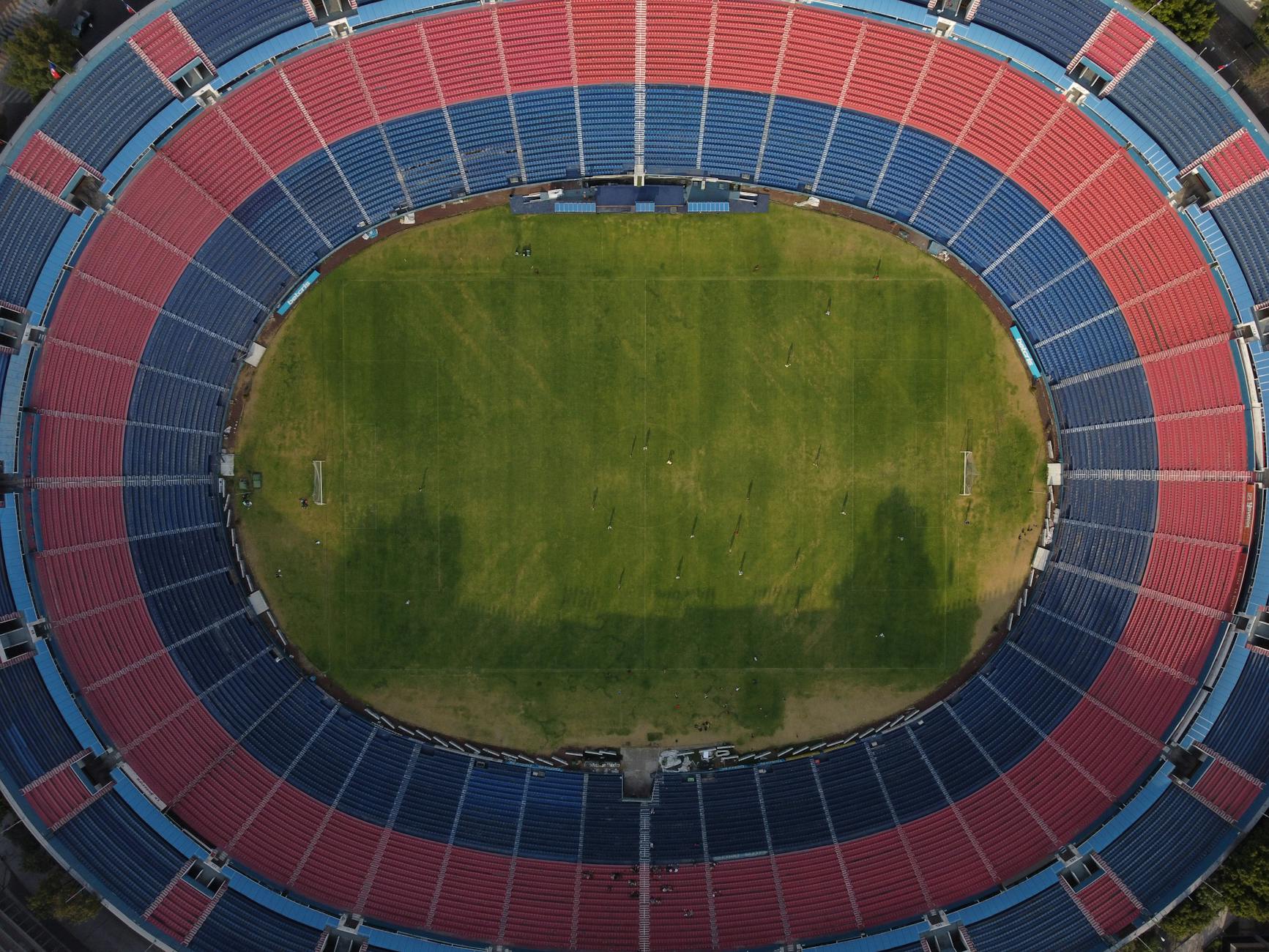
Photo by Israel Torres on Pexels
The 2026 tournament arrives like a familiar song played through a much larger orchestra. There will be more teams, more journeys, more tactical puzzles, and more opportunities for a supposedly minor detail to become decisive: a delayed recovery session, a humid afternoon in Mexico, a long flight between host cities, or a substitute entering in the 72nd minute with fresh legs and a mandate to attack. The arithmetic is dramatic. Compared with the 2022 World Cup’s 64 matches, FIFA’s 2026 edition rises to 104, an increase of 62.5 percent, and every extra match expands the sample available for Football Insights analysis. For readers studying football 2026 World Cup predictions, the central question is not merely who has the best starting eleven; it is which teams preserve expected performance across three weeks of pressure, travel, and uncertainty. As FIFA’s official tournament overview confirms, this will be a continental event rather than a single-country race.
Want a sharper starting point for the tournament picture?
The Quick Comparison
| Tournament feature | 2026 FIFA World Cup detail | Why it matters |
|---|---|---|
| Host countries | Canada, Mexico, United States | Three travel environments and different climates |
| Host cities | 16 | More regional scheduling and logistical variation |
| Qualified teams | 48 | Wider competitive field and more debutants |
| Group stage | 12 groups of four | Three group matches per team |
| Total matches | 104 | More data for form and tactical analysis |
| Opening match | June 11, 2026, Mexico City | Historic launch at Estadio Azteca |
| Final | July 19, 2026, New Jersey area | The ultimate high-pressure fixture |
| Major U.S. venues | Atlanta, Los Angeles, and other cities | Distinct fan cultures and match-day conditions |
This comparison reveals the tournament’s true shape: expansion is not simply a bigger guest list. It changes probability. A 48-team field creates more paths to qualification, but the knockout phase becomes a separate competition in which one poor half can erase weeks of careful work. FIFA’s official World Cup regulations and competition information should remain the authority for final scheduling, draw details, and competition rules because fixtures, venues, and qualification information can change as the event approaches. The host-city split also matters to football 2026 World Cup betting analysis: Atlanta’s Mercedes-Benz Stadium offers a distinctive enclosed setting, Los Angeles brings eight matches and a broad fan program, while Mexico City introduces altitude considerations that deserve more attention than generic home-advantage claims. That is our first information gain: travel burden should be modelled as a sequence of recovery costs, not as one vague “away factor.”
The numbers that change the forecast
For a prediction model, the most important baseline is not a team’s historical trophy cabinet but its expected points per match adjusted for opponent strength, rest, and venue. A simple framework might begin with:
- Baseline team strength: recent competitive results weighted by opponent quality.
- Availability adjustment: expected goals and defensive actions lost through injuries or suspensions.
- Environment adjustment: altitude, heat, humidity, pitch, and travel distance.
- Game-state adjustment: whether a team must win, draw, or protect a lead.
- Market comparison: implied probability from odds, after accounting for bookmaker margin.
Suppose a team has a 58 percent estimated chance of winning a group match, a 24 percent draw probability, and an 18 percent loss probability. Its expected points are 1.98, calculated as (0.58 × 3) + (0.24 × 1). That figure is more useful than calling the team “strong,” because it can be compared against another team’s 1.72 expected points under similar conditions. Football Insights can use this logic alongside player data, but readers should remember that probability is a tool for disciplined uncertainty, not a promise of profit.
[Internal Link: 2026 World Cup prediction methodology]
Round 1: Why Does the Expanded Format Matter?
The 2026 World Cup format matters because 48 teams will be divided into 12 groups of four, with the top two teams and the eight best third-placed teams advancing to a 32-team knockout bracket. This gives every nation three group matches while adding a new elimination round before the last 16. The format increases access and match volume, but it also makes goal difference, late-game management, and third-place comparisons unusually valuable.
The tournament’s structural change creates a fascinating contradiction. Qualification for the knockout stage may become more attainable for teams that previously faced a near-impossible group, yet the cost of one defeat remains severe if the team enters a crowded third-place calculation. A 1-0 defeat followed by two 1-0 victories could produce six points and a healthy position; two draws and a narrow defeat might leave a team dependent on results in eleven other groups. That is where the expected-value lens becomes powerful. The difference between scoring a second goal in stoppage time and failing to do so may influence not only one table but the entire ranking of third-placed teams. Do not read the new format as automatic generosity. It rewards consistency, but it also multiplies the number of tie-break scenarios, which makes live tournament tracking essential.
Group-stage tactics and the third-place race
Coaches may approach the group stage with a more flexible risk profile. In a four-team group, the first match still sets emotional direction, but teams can calculate more carefully because eight third-placed sides will progress. That could encourage controlled draws early in the schedule, especially when two evenly matched teams believe their combined expected points are safer than an open contest. However, the incentive changes if a team loses its opener: it may need to increase attacking volume immediately, because a conservative second match can leave its expected qualification probability collapsing.
The key metrics are not limited to possession or shots. Analysts should monitor field tilt, progressive carries, high turnovers, set-piece expected goals, goalkeeper post-shot save percentage, and the quality of chances conceded. A team producing 1.7 expected goals from low-value attempts may look active while creating less danger than a side producing 1.1 expected goals from clear central opportunities. Opta’s football analytics resources explain why event data must be interpreted in context rather than treated as a decorative collection of numbers. One contrarian insight follows: in the 2026 group stage, a team with slightly lower possession but superior rest-defense structure may outperform a more fashionable possession side because transition protection becomes more valuable when every match carries qualification consequences.
Review the tactical variables before trusting a headline prediction.
Round 2: How Will Host Cities Shape the Tournament?
Host cities will shape the 2026 World Cup through travel distance, climate, altitude, stadium design, and local football culture. Canada, Mexico, and the United States provide different environmental conditions, so teams drawn into demanding travel sequences may need deeper squads and more aggressive recovery planning. Venue-specific conditions should therefore be included in match previews, especially for teams moving between Mexico City, coastal locations, and large North American metropolitan areas.
Atlanta and Los Angeles illustrate two different tournament experiences. Atlanta presents Mercedes-Benz Stadium as a major enclosed venue with a powerful soccer identity connected to Atlanta United, while Los Angeles combines SoFi Stadium match days with fan celebrations at the LA Memorial Coliseum and across the region. The Los Angeles host program has promoted eight matches and 39 days of fan activity, a useful reminder that the football 2026 World Cup will extend beyond ninety minutes. A fan may watch a match in one city, follow a national-team gathering in another, and encounter a public viewing environment shaped by local communities rather than official stadium attendance alone. Meanwhile, Mexico City carries historic weight through Estadio Azteca, a venue associated with previous World Cup finals and an atmosphere that can alter the emotional temperature before kickoff. “The World Cup is a festival of football,” FIFA’s public tournament messaging repeatedly emphasizes; in 2026, that festival will physically stretch across a continent.
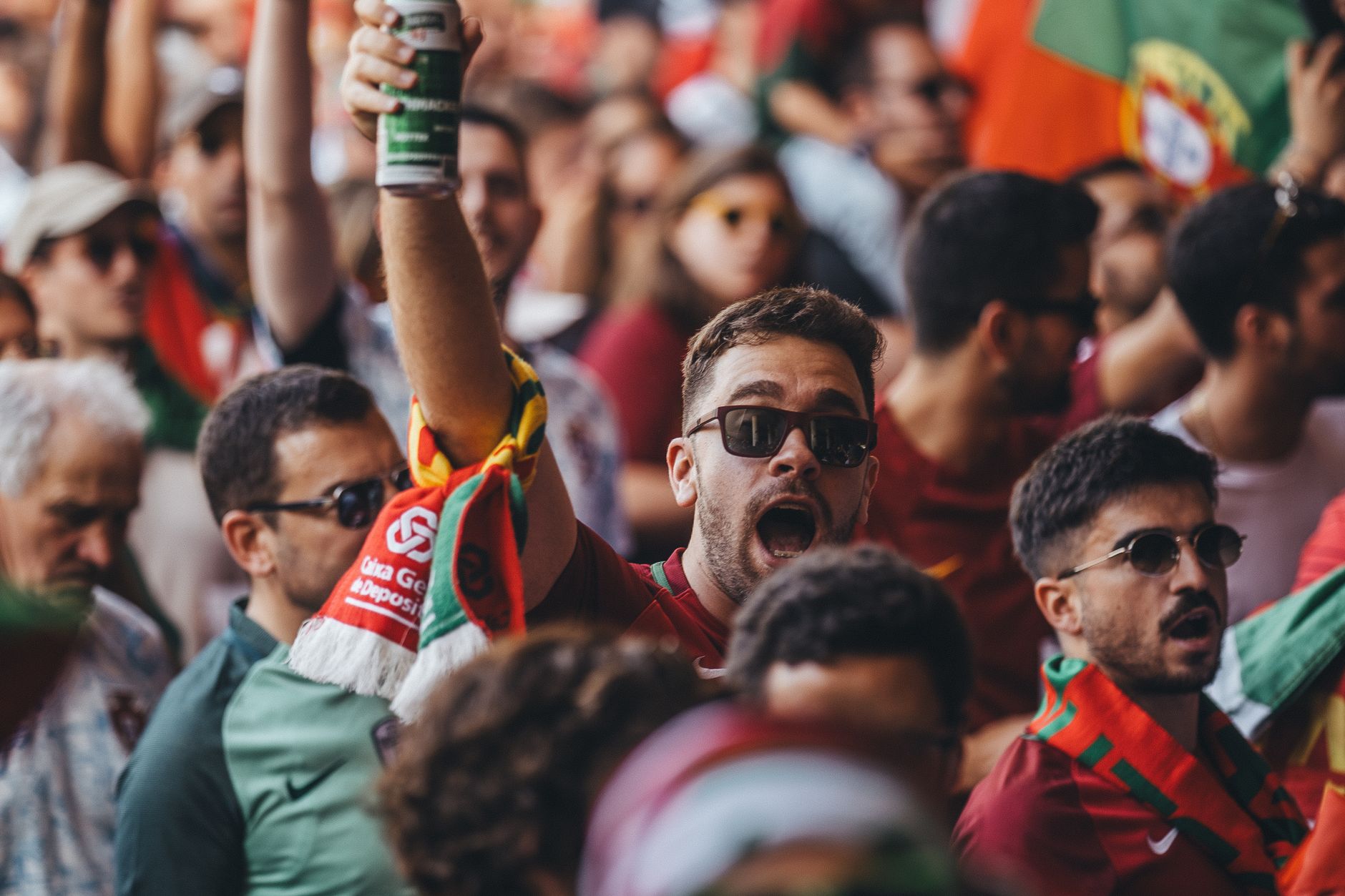
Photo by Omar Ramadan on Pexels
Travel, recovery, and the hidden probability tax
Travel is often discussed romantically, as if a long flight merely adds a few hours to a schedule. The operational reality is more severe. A squad travelling across time zones must manage sleep timing, training intensity, hydration, nutrition, and the transition from hotel routine to match-day routine. If a team’s performance normally declines by three percent after a short recovery window, and its opponent improves by two percent through local familiarity, the combined swing can be larger than the difference between two evenly rated teams. The exact percentage will vary, but the principle is measurable.
A useful pre-match checklist includes:
- Count flight distance and time-zone changes between fixtures.
- Compare the number of recovery days, not simply calendar dates.
- Identify altitude and heat exposure before training plans are announced.
- Check whether the squad has reliable substitutes in high-intensity positions.
- Recalculate the forecast after confirmed lineups and weather updates.
The most overlooked edge may be scheduling asymmetry. Two teams can both have three rest days, yet one may have travelled after a night match while the other completed a short local transfer in daylight. That difference should not automatically create a betting selection, but it should change confidence intervals. Football Insights readers should treat venue and logistics as modifiers of probability rather than excuses invented after a result.
[Internal Link: World Cup host cities and match-day planning]
Round 3: Which Teams and Players Deserve the Closest Attention?
The teams deserving the closest attention are those combining elite chance creation, defensive stability, squad depth, and adaptable game plans. Traditional contenders such as Argentina, France, Brazil, England, Germany, Spain, and Portugal will attract the largest public interest, but tournament value can emerge from second-tier challengers with strong set pieces, efficient transitions, or goalkeepers performing above expectation. Player evaluation should focus on role, availability, and tactical fit rather than fame alone.
The expanded field may give emerging teams a better route into the knockout phase, yet the Round of 32 will punish shallow rotations. A team that relies on one creative midfielder for progression may struggle if opponents block that player and force wide circulation. Conversely, a side with two press-resistant midfielders and quick full-backs can change its attacking route without changing its identity. Expected goals, ball recoveries, duel success, progressive passes, and carries into the penalty area provide a stronger profile than goals and assists alone. UEFA technical reports offer useful examples of how elite tournaments are analysed through tactical structures, pressing patterns, and positional relationships. The romantic part of football remains intact, but the winning edge often lives in the quiet details: who can receive under pressure, who can defend the second ball, and who still accelerates in the 88th minute.
Reading predictions without being misled
A prediction is useful only when its assumptions are visible. If a model gives France a 22 percent chance of winning the tournament and Brazil 17 percent, that is not a declaration that France will win; it is a statement about relative likelihood under a particular information set. Odds convert probability into price, but bookmakers also include a margin, meaning the listed probabilities may add to more than 100 percent. Bettors must distinguish a strong team from a valuable price, because those are not identical concepts.
For example, a 2.00 decimal price implies 50 percent before margin adjustments. If your carefully researched estimate is 54 percent, the theoretical expected return per one unit is 0.54 × 2.00 - 1 = 0.08, or eight percent before limits, variance, and other costs. If your estimate is only 49 percent, the same price is negative expected value despite the team being famous and talented. This is why Football Insights should present match predictions as ranges and confidence levels rather than theatrical certainty. Responsible gambling guidance from GamCare states that gambling should remain entertainment and should not be used as a way to make money; that principle is not a footnote but the foundation of any serious betting discussion.
Want to compare tactical form with market probability?
A disciplined approach to football 2026 World Cup betting
Because the industry surrounding major football tournaments is enormous, readers can easily mistake volume of information for quality of information. Thousands of previews may repeat rankings, star names, and old tournament narratives without explaining how a conclusion was reached. A more rigorous process separates research into pre-match information, tactical interpretation, and price evaluation.
- Verify team news through official federation or tournament sources.
- Compare recent performances against the strength of opponents.
- Separate home-region familiarity from unsupported “home advantage.”
- Avoid increasing stakes after a loss; variance is not evidence of bad luck.
- Set a fixed budget before the tournament and record every selection.
- Never chase losses, borrow money, or treat promotional offers as guaranteed value.
A practical information-gain method is to write the forecast before checking the market, then compare your probability with the available price. If the market has already incorporated an injury, weather update, or lineup change, your apparent edge may disappear. Also record closing prices where possible: over a large sample, consistently beating the closing line is a more meaningful process signal than a short run of winning tickets. No method eliminates uncertainty; football is gloriously resistant to complete control. But disciplined records can reveal whether your reasoning is genuinely improving or merely being flattered by memorable outcomes.

Photo by George Morina on Pexels
The Final Score & Who Should Pick What
The 2026 World Cup should be analysed as a 104-match ecosystem in which format, travel, climate, squad depth, and price all interact. Casual fans should prioritize the host-city story, group-stage drama, and player narratives; tactical readers should focus on pressing resistance, transition defence, set pieces, and rotation; prediction-focused readers should compare model probabilities with market prices only after confirming lineups and scheduling. The best overall approach is not to pick the most famous team automatically, because the tournament’s expanded geography creates conditions in which operational strength may matter as much as headline talent.
| Reader profile | Best analytical focus | Sensible action |
|---|---|---|
| New fan | Groups, host cities, key players | Follow fixtures and official updates |
| Tactical enthusiast | Pressing, buildup, transitions | Compare team structures match by match |
| Data-focused reader | Expected goals, rest, travel, odds | Track probabilities and closing prices |
| Responsible bettor | Budget, limits, verified information | Treat wagers as entertainment only |
| International visitor | Transport, venue policy, fan events | Use official city and FIFA information |
Our final score is therefore not a single champion prediction. It is a decision framework: use official FIFA information for facts, team data for performance, venue context for conditions, and expected value for prices. Football Insights can serve as the daily companion in that process, delivering match predictions, tactical notes, player statistics, and tournament coverage while leaving the final decision with you. The summer of 2026 will be vast, noisy, and magnificent; together, we should meet it with clear eyes, a calculator, and enough humility to respect one deflected cross.
Explore the next layer of tournament analysis before the fixtures accelerate.
[Internal Link: daily 2026 World Cup match predictions]
Frequently Asked Questions
Q: What is the football 2026 World Cup format?
A: The football 2026 World Cup will feature 48 teams in 12 groups of four, followed by a 32-team knockout stage. The top two teams from each group and the eight best third-placed teams will advance. FIFA has scheduled 104 matches across Canada, Mexico, and the United States, making this the largest World Cup edition to date.
Q: When does the 2026 FIFA World Cup start and finish?
A: The 2026 FIFA World Cup is scheduled to begin on June 11, 2026, and conclude on July 19, 2026. The opening match is planned for Mexico City, while the final is scheduled for the New Jersey area at MetLife Stadium. Check FIFA’s official fixture information before booking travel because final match assignments and operational details can be updated.
Q: How should I analyse a 2026 World Cup match prediction?
A: Analyse opponent strength, expected goals, confirmed lineups, rest days, travel, venue conditions, and market price before trusting a prediction. A team’s win probability must be compared with the implied probability of the odds, not with the team’s popularity. Record your assumptions and review the result over many matches instead of judging a model from one dramatic upset.
Q: What is the difference between team strength and betting value?
A: Team strength describes how likely a side is to perform well, while betting value depends on whether the available odds exceed your estimated probability. A 60 percent favourite can still be poor value at an extremely short price. Conversely, an underdog with a 35 percent chance may offer theoretical value if the odds imply only 28 percent, although uncertainty and bookmaker margin remain important.
Q: How can I follow World Cup host-city conditions?
A: Use FIFA, national federations, venue operators, and official city websites to monitor fixtures, transport, weather, stadium policies, and fan events. Atlanta, Los Angeles, Mexico City, and other host cities may differ substantially in climate, travel time, and match-day procedures. Confirm information close to the event rather than relying on an old social-media post or an unofficial ticketing page.
Q: What should I do if a prediction loses?
A: Do not chase the loss; review the original probability, lineup assumptions, price, and match events before making another decision. Football outcomes contain substantial variance, so one defeat does not prove that the analysis was worthless. If betting stops feeling controlled or entertaining, pause immediately and contact a recognised support service such as GamCare or a relevant regulator in your jurisdiction.
Q: Is Football Insights a bookmaker?
A: Football Insights is a FIFA World Cup focused content site, not a substitute for a licensed bookmaker or financial adviser. Its coverage centres on match predictions, team tactics, player statistics, and tournament updates for fans following the 2026 World Cup. Always verify local gambling laws, use licensed operators where permitted, and treat any betting activity as optional entertainment rather than income.