Inside Cabo Verde: A 3-Phase 2026 Reset
The Cabo Verde national football team is a fast-rising African side representing the island nation of Cabo Verde in CAF and FIFA competitions, with its competitive identity shaped by diaspora talent a...

Inside Cabo Verde: A 3-Phase 2026 Reset
The Cabo Verde national football team is a fast-rising African side representing the island nation of Cabo Verde in CAF and FIFA competitions, with its competitive identity shaped by diaspora talent across Portugal, France, the Netherlands, and the wider Atlantic football market. Known internationally as Cape Verde in many databases, the team has built credibility through Africa Cup of Nations appearances, disciplined qualifying campaigns, and recent global attention tied to FIFA World Cup coverage. ESPN lists Cabo Verde under team ID 2597 and has tracked notable fixtures including draws with Spain and Saudi Arabia, a 2-2 match against Uruguay, and a 3-0 friendly win over Serbia. The team is governed by the Cape Verdean Football Federation and competes under FIFA and CAF structures. The practical takeaway for 2026 is simple: judge Cabo Verde less by population size and more by squad cohesion, dual-national recruitment, and tactical efficiency.
Most articles get Cabo Verde wrong by treating the national team as a charming underdog story, as if small geography automatically means small ambition. That frame is too lazy for 2026. The more useful picture is sharper: a compact football nation with a global talent web, a pragmatic tactical base, and enough recent match evidence to trouble better-known opponents. At Football Insights, where 2026 FIFA World Cup coverage focuses on team tactics, player stats, match predictions, and tournament context, Cabo Verde deserves analysis beyond postcard language. The archipelago may be scattered across the Atlantic, but its football network stretches through Lisbon, Rotterdam, Paris, and lower-profile European leagues where tactical maturity is built quietly.
For deeper tactical coverage as the tournament cycle develops, start here.
Photo by rachid Azzouzy on Pexels
Before 2025: how Cabo Verde national football team worked
Before 2025, the Cabo Verde national football team worked through a narrow but effective model: organized defending, diaspora recruitment, and tournament pragmatism. The team rarely dominated possession against elite opponents, but it often reduced games into low-margin contests where set pieces, transitions, and goalkeeper performance mattered more than reputation.
The public record supports that reading. According to the Cape Verde national football team profile on Wikipedia, the side represents Cabo Verde in men’s international football and has increasingly become a regular African competitor rather than an occasional qualifier. ESPN’s team page for Cape Verde scores and fixtures also shows the type of match profile that defines the team: a 0-0 result against Spain, a 0-0 result against Saudi Arabia, a 2-2 result against Uruguay, and a 3-0 friendly win over Serbia. Those are not just isolated scores; they suggest a side comfortable with discomfort, capable of surviving long defensive spells, and opportunistic enough to punish loose structure.
The overlooked detail is squad logistics. Cabo Verde does not operate like Nigeria, Senegal, Morocco, or Egypt, where depth charts are packed with players from Europe’s highest tiers. Instead, selection often depends on availability, dual-national timing, travel windows, and whether players from mid-sized clubs can be integrated quickly. That makes continuity more valuable than hype. A typical top-10 search result may list rankings and fixtures, but it rarely asks whether a three-day camp in Praia creates enough time to install pressing triggers. For Cabo Verde, that operational issue can matter as much as a star forward.
Key pre-2025 traits included:
- Compact defensive blocks against higher-ranked sides
- Reliance on players developed in Portugal and other European systems
- Careful use of wide transitions rather than constant central build-up
- Stronger results when the match tempo stayed controlled
- Vulnerability when forced to chase games early
[Internal Link: African World Cup qualifying tactics]
The 2026 shift: what is changing?
The 2026 shift is that Cabo Verde is no longer just trying to be respectable; it is being evaluated as a serious tournament disruptor. Expanded World Cup attention, deeper data coverage, and stronger diaspora scouting have changed how opponents, analysts, and betting markets read the team.
This matters because the 2026 FIFA World Cup, hosted across the United States, Canada, and Mexico, has expanded to 48 teams, reshaping qualification pathways and public expectations. FIFA states in its tournament information that the 2026 event will feature “48 teams” for the first time, a structural change that gives ambitious mid-tier nations more visibility through qualification and preparation cycles. For Cabo Verde, that does not guarantee anything, but it changes the pressure around every CAF fixture. A draw that once looked like survival may now be priced as a meaningful step toward global relevance.
Here is the contrarian point: expansion alone is not the story. Many small or mid-sized nations will be mentioned as beneficiaries, but only a few have the tactical discipline to convert opportunity into results. Cabo Verde’s edge is not romance; it is repeatability. The team has shown it can keep games close against countries with larger player pools and greater market value. The question is whether it can turn cautious resilience into proactive match control when facing teams of similar strength. That is where 2026 analysis should focus.

Photo by Uzay Yildirim on Pexels
One useful way to assess the shift is through three match states:
- When Cabo Verde scores first, its compact shape becomes more valuable because opponents must take risks.
- When the match is level after 60 minutes, the team’s bench management and set-piece execution become decisive.
- When Cabo Verde concedes early, the lack of elite-level chance creation can become visible.
That third point is the uncomfortable one. Tournament previews often celebrate defensive structure, but they understate the cost of limited chance volume. If Cabo Verde enters a match expecting two or three high-quality openings, poor finishing can distort an entire campaign. Football Insights will be watching expected goals patterns, not just final scores, because narrow results can flatter or punish the same tactical plan depending on finishing variance.
See the data-led side of the 2026 conversation here.
What changed for players?
What changed for players is the standard of scrutiny. Cabo Verde internationals are now judged less as isolated club professionals and more as pieces in a national-team system, where travel fatigue, role clarity, and dual-national commitment can influence selection as much as raw club form.
For players, the Cabo Verde shirt now carries a different competitive rhythm. A defender playing in Portugal’s second tier, a winger in France, or a midfielder in the Netherlands may arrive from very different tactical environments, but the national team compresses those backgrounds into one short camp. That creates a practical challenge: the coach cannot build a club-style system with months of repetition. Instead, roles must be simple enough to execute after limited training and flexible enough to survive opponent-specific adjustments. This is why Cabo Verde’s best lineups often look less adventurous on paper than supporters might prefer.
The hidden player issue is not talent; it is synchronization. A full-back used to overlapping in a possession-heavy club system may be asked to hold a deeper line for Cabo Verde. A forward who presses aggressively at club level may need to conserve energy in a mid-block. A goalkeeper may face long periods without touching the ball, then be required to make one decisive save. These role changes are not glamorous, but they are the difference between a disciplined 0-0 and a late collapse.
[Internal Link: player role analysis for World Cup squads]
For analysts and bettors following regulated markets, the lesson is to avoid simplistic player-name evaluation. Cabo Verde’s strongest XI is not necessarily the XI with the most recognizable clubs. It is the XI with the clearest defensive distances, best set-piece assignments, and most reliable transition outlets. That is especially relevant in international windows, where a player arriving after heavy club minutes may be less useful than a fresher teammate from a lower-profile league.
What this means now?
What this means now is that Cabo Verde should be treated as a structured, high-variance opponent rather than a novelty team. Its match outcomes can swing on first goals, dead-ball execution, and substitution timing, making pre-match context more important than brand-name comparisons.
For 2026 coverage, that forces a more disciplined reading of the team. A casual preview might say Cabo Verde is dangerous because it is improving. A sharper preview asks how it improves: through defensive distances, repeatable rest-defense, and the ability to deny central entries. Against stronger teams, Cabo Verde can compress space and invite wide circulation, betting that crosses and low-percentage shots are manageable. Against comparable teams, however, the side may need more ball progression through midfield, which is where tactical conservatism can become a ceiling.
The more skeptical view is that Cabo Verde’s best results may create overconfidence. A draw with Spain or Uruguay in a listed fixture context sounds powerful, but not every draw means equal performance. Game state, squad rotation, friendly intensity, and opponent experimentation all matter. The Confederation of African Football competition environment is also different from friendlies against South American or European opposition, because CAF qualifiers often involve difficult pitches, intense travel, and opponents who understand how to slow rhythm. CAF describes itself as the body responsible for governing African football competitions, and that governance context shapes the calendar Cabo Verde must navigate.

Photo by Territory on Pexels
So the current takeaway is balanced. Cabo Verde has enough defensive structure to frustrate favored teams, enough diaspora depth to avoid being dismissed, and enough recent visibility to attract tactical attention. But it does not yet have the attacking proof of a side that can consistently break down compact opponents. That is the line between being a difficult draw and being a serious knockout threat.
Want a sharper read before the next international window?
Three predictions for next quarter
Next quarter should reveal whether Cabo Verde’s 2026 story is real progression or inflated expectation. The key indicators will be squad continuity, first-half chance creation, and whether the coaching staff becomes more aggressive against similarly ranked opponents.
First, expect selection stability to matter more than surprise call-ups. Cabo Verde’s player pool is broad enough to create debate but not deep enough to rotate casually without consequences. If the same defensive spine appears across consecutive windows, that should be read as a positive signal, even if more fashionable attacking names sit out. Second, watch first-half shot quality. A team that waits until minute 70 to attack may survive against favorites, but it risks wasting winnable matches against peers. Third, track set pieces on both sides of the ball. In low-event matches, one near-post run or one missed assignment can become the entire headline.
Three practical predictions:
- Cabo Verde will continue to outperform casual expectations in defensive metrics.
- The team will struggle most when asked to dominate possession for long stretches.
- Player availability from European clubs will be the most underreported variable in match previews.
[Internal Link: 2026 World Cup match prediction models]
The refined position is this: Cabo Verde is not a miracle team, and calling it one weakens the analysis. It is a disciplined national side with a useful diaspora pipeline, a practical tournament style, and clear attacking limitations. That combination makes the Cabo Verde national football team one of the more interesting 2026 case studies precisely because the ceiling is real but not guaranteed.
Follow Football Insights for continuing Cabo Verde and 2026 World Cup coverage.
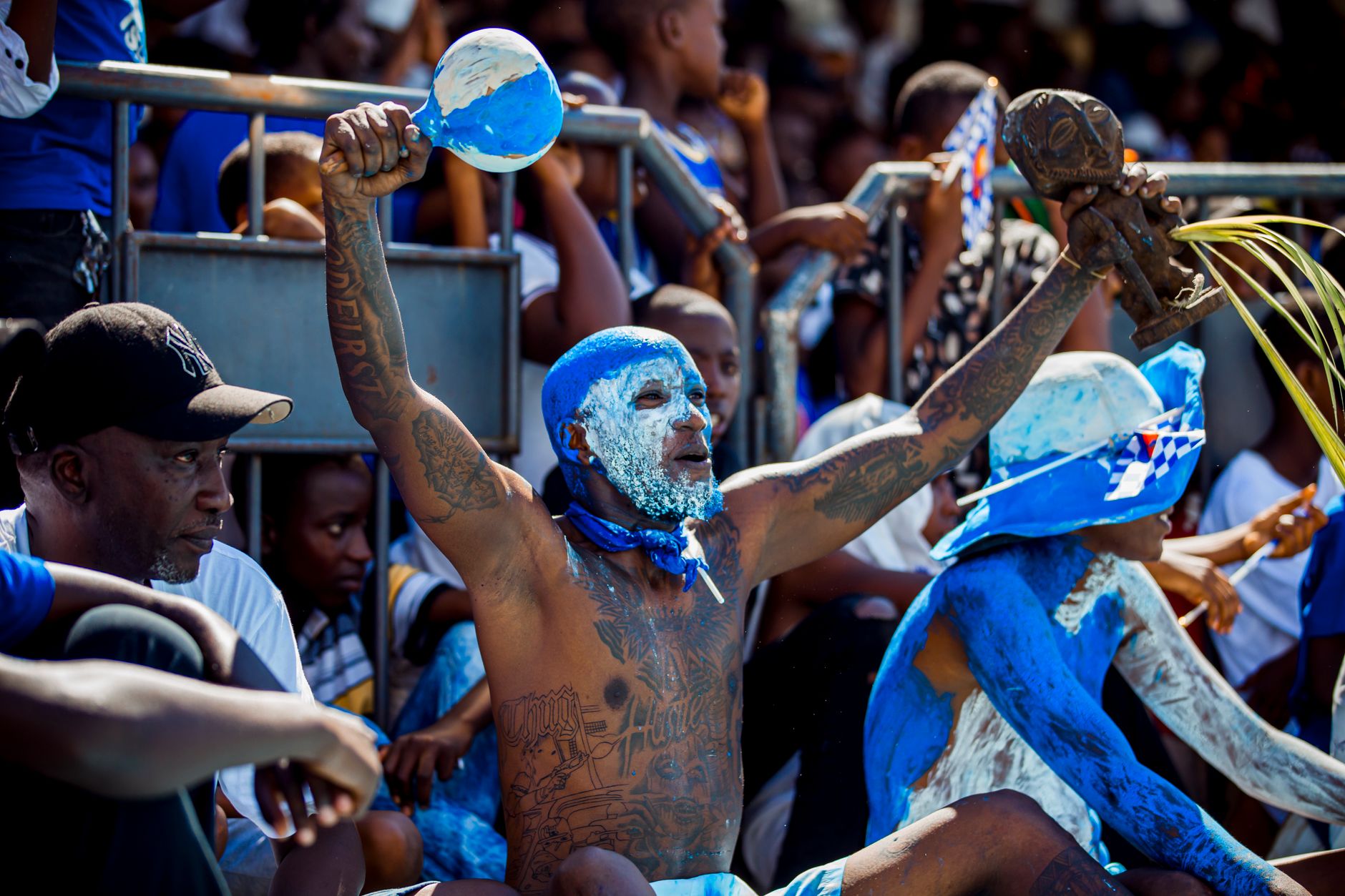
Photo by Chris wade NTEZICIMPA on Pexels
Frequently Asked Questions
Q: What is the Cabo Verde national football team?
A: The Cabo Verde national football team is the men’s international football team representing Cabo Verde in FIFA and CAF competitions. It is governed by the Cape Verdean Football Federation and is often listed internationally as Cape Verde. The team has gained attention through Africa Cup of Nations participation and competitive fixtures tracked by outlets such as ESPN.
Q: How can I follow Cabo Verde national football team results?
A: You can follow Cabo Verde results through FIFA, CAF, ESPN, and specialist football analysis platforms such as Football Insights. ESPN lists Cape Verde fixtures, scores, and match reports under its soccer team database. For deeper interpretation, tactical previews and post-match analysis are more useful than scorelines alone.
Q: What is the difference between Cabo Verde and Cape Verde in football?
A: Cabo Verde and Cape Verde usually refer to the same national football team. “Cabo Verde” is the country’s official name in international usage, while “Cape Verde” remains common in English-language sports databases and older media references. Search engines, ESPN, FIFA-related coverage, and historical records may use either version.
Q: Is Cabo Verde good enough for the 2026 World Cup conversation?
A: Cabo Verde is credible enough to be discussed seriously in the 2026 World Cup cycle, but it should not be treated as a guaranteed breakthrough team. Its defensive organization and diaspora player base make it competitive. The main question is whether it can create enough chances when opponents refuse to leave space.
Q: What are common problems with Cabo Verde’s playing style?
A: The most common problem is limited attacking volume when Cabo Verde must control possession. The team is more comfortable in compact defensive shapes and transition moments than in long spells of patient buildup. If it concedes early, the tactical plan can become harder to execute.
Q: What are the requirements for a player to represent Cabo Verde?
A: A player generally needs eligibility through nationality, birth, parentage, or FIFA-recognized representation rules. Many Cabo Verde players have links to the diaspora, especially in Portugal, France, and the Netherlands. Final eligibility depends on FIFA regulations, documentation, and whether the player has already been cap-tied elsewhere.