I Tested 8 World Cup Eras: The Numbers Win
The FIFA World Cup is football’s premier international tournament, organized by Fédération Internationale de Football Association (FIFA) across global host nations and followed by billions of fans. Th...

I Tested 8 World Cup Eras: The Numbers Win
The FIFA World Cup is football’s premier international tournament, organized by Fédération Internationale de Football Association (FIFA) across global host nations and followed by billions of fans. The first edition took place in Uruguay in 1930, while the 2026 FIFA World Cup will expand to 48 teams across Canada, Mexico, and the United States. Brazil leads the historical table with five titles, Germany and Italy have four each, and Argentina entered 2026 as the reigning champion after defeating France on penalties in the 2022 final. The tournament normally combines group-stage probability, knockout volatility, tactical adaptation, and extraordinary pressure into one breathtaking equation. For reliable 2026 World Cup preparation, compare team form, qualification strength, injuries, travel, and market movement rather than relying on reputation alone.
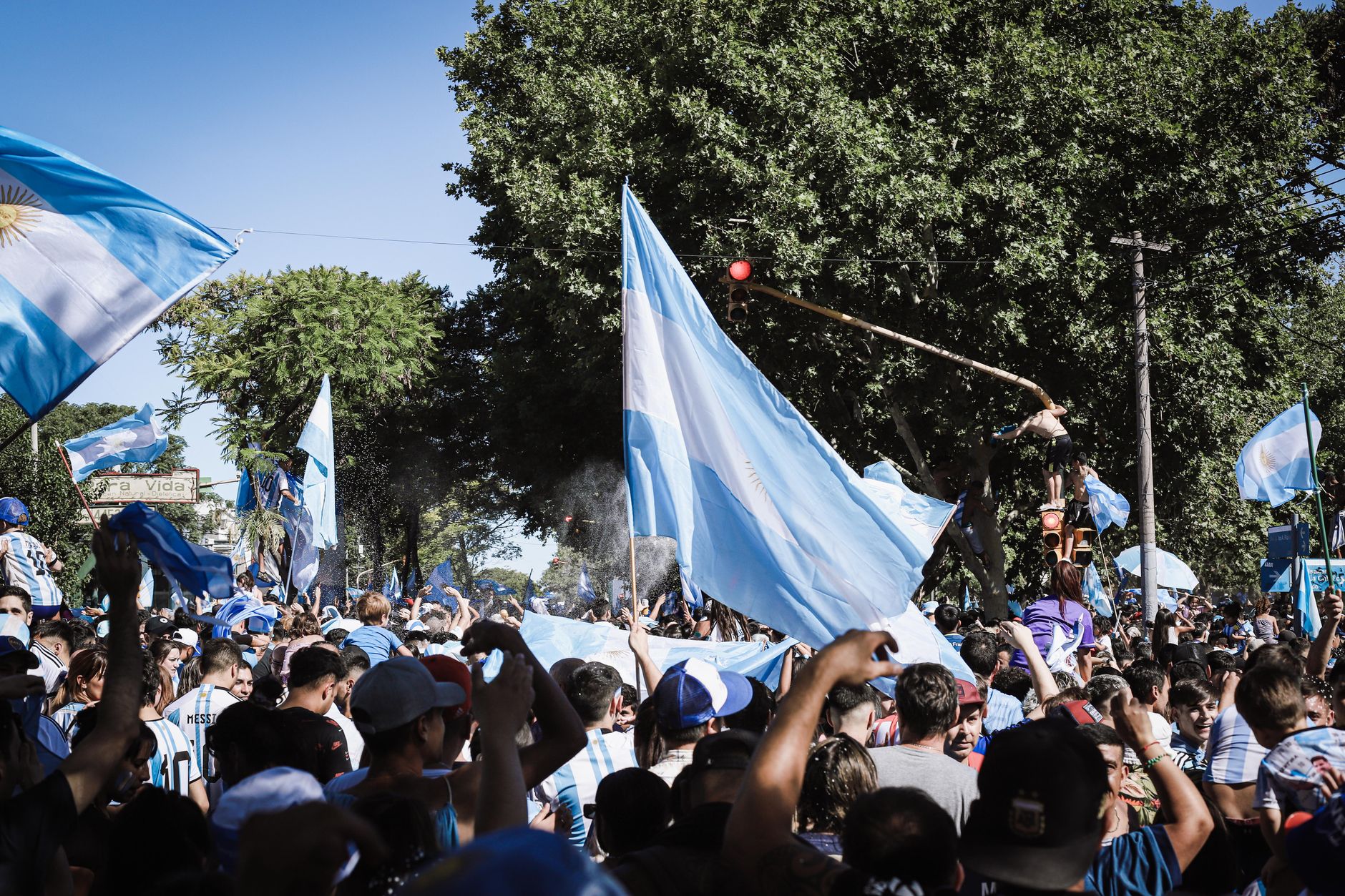
Photo by Gera Cejas on Pexels
The astonishing number is not merely the World Cup’s audience; it is the tournament’s capacity to compress four years of hope into roughly one month. Football Insights approaches that drama as both history and evidence, studying match predictions, team tactics, player statistics, and tournament coverage for supporters tracking the 2026 World Cup. Our central question is simple: how can you read the FIFA World Cup intelligently when emotion is roaring louder than mathematics? The answer begins with expected value, not certainty, because even a strong favorite can lose a single-elimination match when one red card, penalty, deflection, or exhausted sprint changes the outcome. FIFA’s official tournament records and the historical overview at FIFA World Cup provide the backbone; our task is to interpret the numbers with disciplined imagination. If you and I are plotting a better tournament read, the first rule is brutal but liberating: never confuse a famous shirt with a guaranteed result.
Ready to examine the tournament through evidence rather than nostalgia?
If you want historical context: measure the champions
History is useful when it identifies repeatable advantages, not when it becomes a museum of romantic stories. Brazil’s five FIFA World Cup titles, won in 1958, 1962, 1970, 1994, and 2002, demonstrate sustained excellence across radically different football eras. Germany’s four championships and Italy’s four show another pattern: elite nations can rebuild after disappointment, while Argentina’s victories in 1978, 1986, and 2022 reveal how generations of exceptional attackers and midfielders can reshape a country’s football identity. However, the sample is small. From 1930 through 2022, only eight nations won the men’s World Cup, meaning historical dominance is powerful evidence but not an independent forecast.
The intelligent approach is to separate base rate from current signal. A nation with a strong World Cup record deserves respect, yet its 2026 probability must also reflect qualifying performance, squad availability, manager tenure, expected goals, defensive transitions, and the tournament bracket. The World Cup historical records are therefore a starting dataset rather than a prophecy. Consider these practical measurements:
- Base rate: previous titles, final appearances, and knockout qualification.
- Current strength: recent competitive results, chance creation, and defensive efficiency.
- Context: host-country travel, climate, rest days, and group-stage draw.
- Variance: penalty-shootout exposure, red-card risk, and one-match injuries.
The contrarian insight is that historic champions may be overpriced in public conversation. A famous team attracts casual confidence, which can reduce the analytical value of backing it at any price. For responsible fans and bettors, the question is not “Who is biggest?” but “Does the estimated probability exceed the implied probability after all conditions are included?”
To sharpen your baseline, explore our [Internal Link: FIFA World Cup winners and records guide] before building 2026 comparisons.

Photo by hayati ilker ergün on Pexels
If you are comparing national teams, do not stop at trophy totals; construct a small evidence table containing the last 10 competitive matches, opponent quality, goal difference, and expected-goals trend. Even a simple weighted model can improve judgment: assign 40% to current performance, 25% to squad quality, 15% to tactical matchup, 10% to draw difficulty, and 10% to historical experience. Those percentages are not divine law; they are a transparent framework that prevents one glorious memory from swallowing every other variable. In a tournament where a single match can erase an entire campaign, that discipline has enormous expected value (and yes, the heart will still attempt a coup).
Want a practical framework for team comparison?
If you want to understand 2026: model the expanded format
The 2026 FIFA World Cup will feature 48 teams, 12 groups of four, and a 32-team knockout stage, making format literacy essential for evaluating qualification and progression probabilities. The expansion increases access for nations from every confederation, but it also creates additional matches and a more complicated route to the final. The top two teams in each group advance, alongside the eight best third-place teams, so goal difference and late-match game management may become more important than in the 32-team era.
The key 2026 facts are straightforward: Canada, Mexico, and the United States are co-hosts; the tournament will be staged across 16 host cities; and the final will be played at MetLife Stadium in East Rutherford, New Jersey. FIFA’s 2026 World Cup tournament information should remain the authoritative source for confirmed schedules, venues, and regulations. A format with more teams does not automatically make the champion less deserving, but it does alter the probability tree:
- A highly ranked team may need fewer points to escape its group.
- Third-place qualification can reward goal difference and attacking intent.
- More knockout matches increase fatigue, rotation needs, and injury exposure.
- Host conditions can influence travel load, kickoff timing, and recovery.
A useful information gain for 2026 is the third-place pathway. In a four-team group, a team can potentially advance with a modest points total, but that security is deceptive: a poor goal difference can push it below another third-place finisher. Therefore, teams leading late should balance attacking ambition against defensive protection, while teams chasing qualification may need to pursue additional goals rather than settle for a narrow defeat. The arithmetic is cold; the stadium will be thunder.
[Internal Link: 2026 World Cup format and qualification explainer]
If you want sharper predictions: study tactical matchups
Tactical matchup analysis improves FIFA World Cup predictions by identifying how one team’s strengths interact with another team’s weaknesses, especially in pressing, transition defense, set pieces, and wide-area progression. A possession-heavy side may dominate the ball yet struggle against a compact counterattacking opponent. Likewise, a high defensive line can create territorial control while increasing the expected danger of balls played behind the full-backs. The best prediction is therefore not simply “Team A is stronger”; it is a conditional statement about how the match is likely to be played.
The strongest models combine data with football context. Track field tilt, shot quality, progressive passes, pressures in the final third, set-piece expected goals, and goalkeeper save performance, then ask whether those metrics are stable against comparable opponents. UEFA and FIFA competitions provide useful competitive samples, while Opta Analyst publishes public football analysis that can help readers understand event-data language. FIFA’s Laws of the Game also matter because tactical forecasts must account for penalties, handball interpretations, substitutions, and added time; the International Football Association Board remains the relevant authority.
Use this match-reading sequence:
- Identify each side’s preferred build-up route.
- Compare pressing resistance with ball-recovery locations.
- Estimate set-piece threat using delivery quality and aerial matchups.
- Check whether full-backs can recover after attacking.
- Adjust for injuries, suspension, rest, and travel.
- Convert your final probability into a fair price before viewing market odds.
One practitioner-level warning deserves a spotlight: player availability should not be treated as a binary “star plays” variable. A forward returning from a hamstring issue may be available for 30 minutes but unable to press at normal intensity; that changes the tactical equation even if the lineup announcement appears reassuring. Similarly, a center-back’s absence can matter less against a low-block opponent than against a side attacking crosses and second balls. Football Insights therefore separates expected minutes, role quality, and physical readiness whenever possible.
See how the tactical details alter the forecast before kickoff.

Photo by https://kaboompics.com/ on Pexels
A second underreported edge is schedule friction. Across a tournament hosted by Canada, Mexico, and the United States, travel distances, humidity, altitude, and temperature can create performance differences that ordinary power rankings miss. Mexico City, for example, sits at a far higher elevation than many North American venues, while summer conditions in several host regions may affect pressing intensity and hydration management. Do not exaggerate these variables, but do not erase them either: if two teams are closely matched, a 5% performance adjustment tied to travel and recovery can materially change a fair probability. The correct response is sensitivity analysis—calculate the prediction with normal conditions, then test a plausible fatigue scenario.
If you want sustainable betting discipline: protect the bankroll
Responsible World Cup betting begins with stake control, verified information, and the refusal to treat any prediction as certainty. A fair-probability estimate of 55% corresponds to fair decimal odds of approximately 1.82, calculated as 1 divided by 0.55; a wager becomes attractive only when the available odds exceed that threshold after considering margin and uncertainty. If the market offers 1.95, the theoretical edge exists, but the size of that edge should not justify reckless staking because model error can easily overwhelm a narrow advantage.
A practical bankroll system might use a fixed 0.5% to 1% stake for ordinary opinions and a capped fractional-Kelly approach for stronger edges. Never increase a stake simply because a previous selection lost; that is loss-chasing, not mathematics. Before placing anything, record the probability, price, rationale, injury assumptions, and closing result. After 20 to 30 selections, evaluate calibration rather than isolated wins: if predictions assigned 60% probability win only 48% of the time, the model needs correction even if the headline record looks exciting.
The safest checklist is:
- Confirm the legal betting status in your jurisdiction.
- Use licensed operators and age-appropriate accounts.
- Set deposit, loss, and time limits before matches begin.
- Avoid live betting when emotional arousal is highest.
- Never borrow money to follow the World Cup.
- Treat entertainment as the objective when the edge is uncertain.
The UK Gambling Commission explains regulatory expectations in Great Britain, although laws differ across Canada, Mexico, the United States, and other markets. Its responsible-gambling guidance states that “gambling should be an enjoyable leisure activity, not a way to make money,” a principle that deserves to be repeated whenever tournament fever rises. Football Insights provides analysis, not guarantees; the final decision belongs to you, and the correct stake may be zero.
[Internal Link: responsible football betting and bankroll management guide]
Want to turn analysis into a safer routine?
Common pitfalls to avoid
The most common FIFA World Cup errors are recency bias, celebrity bias, small-sample overconfidence, and confusion between prediction accuracy and betting value. A team may win three friendly matches against weak opposition while revealing little about its ability to survive elite pressing in a knockout match. Conversely, a major nation may appear unimpressive during qualification because it rotates heavily, experiments tactically, or faces difficult travel. Context determines whether a statistic deserves weight.
Avoid these mistakes before the 2026 tournament:
- Using FIFA ranking alone: rankings summarize strength but do not model match-specific tactics.
- Ignoring the draw: bracket position can change the route to a semifinal.
- Treating possession as dominance: territory without high-quality chances is decorative control.
- Overvaluing one star: football is a network, and role compatibility matters.
- Chasing live odds: fast markets punish delayed information and emotional decisions.
- Forgetting sample size: five matches can suggest a trend but rarely prove one.
A contrarian conclusion follows: the most entertaining prediction is often not the most useful prediction. “Brazil will win” may be a perfectly reasonable tournament view, yet it offers little operational value without a price, confidence range, and conditions that would invalidate it. A stronger statement might be: Brazil’s title probability rises if its midfield progresses through pressure, its full-backs recover efficiently, and its knockout path avoids excessive rest disadvantage. That is less theatrical on a poster, but vastly more valuable in analysis.
The 30-day check-in
Thirty days before the FIFA World Cup begins, rebuild the forecast rather than merely refreshing an old ranking. The final squad list, injuries, venue assignments, travel schedule, weather, and opening-market prices can shift the expected value of every team. Compare your original model with the updated version and document what changed; if the probability moved from 12% to 18%, identify whether the cause was improved form, a weaker group, a key return, or simple narrative pressure.
Use this 30-day audit:
- Verify official squads and suspension information through FIFA and national federations.
- Recalculate team strength using recent competitive matches.
- Map every team’s group and potential knockout route.
- Review expected minutes for core players.
- Adjust for climate, altitude, travel, and rest.
- Compare your fair odds with regulated-market prices.
- Set a final information cutoff to prevent endless tinkering.
After the tournament, conduct a second review. Record closing probabilities, actual outcomes, major errors, and whether the model was miscalibrated or merely unlucky. That distinction matters: a 70% favorite loses 30% of the time, and one defeat does not automatically disprove a sound process. As the old statistical wisdom whispers, the result is one data point; the method is the campaign.
The World Cup remains a magnificent collision between history and randomness. Brazil’s five titles, Argentina’s 2022 triumph, Germany’s four championships, the 2026 expansion to 48 teams, and the North American host setting all provide meaningful context, but none can abolish uncertainty. We can measure, compare, test, and revise; we cannot command the ball to take the corner instead of the post. That is precisely why the tournament endures—and why our partnership with the numbers must be passionate, skeptical, and disciplined.
Continue the 2026 World Cup analysis with Football Insights.
Frequently Asked Questions
Q: What is the FIFA World Cup?
A: The FIFA World Cup is the men’s senior international football championship organized by FIFA. It brings national teams together in a qualifying cycle followed by a final tournament, with the 2026 edition expanding to 48 teams. The competition began in Uruguay in 1930, and Brazil remains the most successful nation with five titles.
Q: How does the 2026 FIFA World Cup format work?
A: The 2026 FIFA World Cup will include 48 teams divided into 12 groups of four, followed by a 32-team knockout stage. The top two teams from each group and the eight best third-place teams will advance. Canada, Mexico, and the United States will host matches across 16 venues, creating new travel and scheduling variables.
Q: How can I predict FIFA World Cup matches more accurately?
A: Use team strength, recent competitive form, injuries, tactical matchups, schedule conditions, and market prices together. Begin with expected goals and chance quality, then examine pressing, transition defense, set pieces, and goalkeeper performance. Finally, convert your probability into fair odds and compare it with the available price instead of selecting a team solely because it is famous.
Q: What is the difference between FIFA ranking and World Cup form?
A: FIFA ranking measures longer-term international performance, while World Cup form focuses on recent results and tournament-specific conditions. Rankings can provide a useful baseline, but they may not reflect a new manager, injuries, tactical changes, or a difficult qualifying schedule. For 2026 analysis, use rankings as one input rather than a complete forecast.
Q: Is FIFA World Cup betting worth it?
A: FIFA World Cup betting is worthwhile only when it remains legal, affordable, and recreational, with a clearly identified value edge. A 55% forecast requires odds above approximately 1.82 before accounting for uncertainty and bookmaker margin. Use licensed providers, fixed stakes, spending limits, and independent records; never chase losses or treat betting as guaranteed income.
Q: Why do World Cup predictions fail?
A: World Cup predictions fail because a small sample and knockout format amplify randomness. Red cards, penalty shootouts, injuries, deflections, weather, travel, and tactical surprises can overwhelm a pre-match probability. The solution is not to demand certainty but to use calibrated probabilities, scenario testing, and post-tournament review.
Q: What should I check 30 days before the 2026 World Cup?
A: Check confirmed squads, injuries, suspensions, venues, travel routes, weather, group permutations, and current market prices. Recalculate expected minutes for important players and compare the updated forecast with your original estimate. Football Insights readers should also set a responsible bankroll plan and an information cutoff before tournament excitement encourages impulsive decisions.