Before You Bet, Read This 2026 College Football Breakdown
College football is the NCAA-based American gridiron competition played across the United States, with the Football Bowl Subdivision (FBS), Football Championship Subdivision (FCS), conferences, rivalr...

Before You Bet, Read This 2026 College Football Breakdown
College football is the NCAA-based American gridiron competition played across the United States, with the Football Bowl Subdivision (FBS), Football Championship Subdivision (FCS), conferences, rivalry games, bowl contests, and the College Football Playoff forming its modern competitive spine. In 2026, the regular season runs from late August through early December, followed by bowl games and the CFP, with the national championship scheduled for January 25, 2027, at Allegiant Stadium in Las Vegas. ESPN’s 2026 schedule divides the regular season into 15 numbered weeks, while NCAA.com supplies FBS scores, rankings, news, and championship history. The essential lesson is simple: do not judge a matchup from a team name alone; compare schedule strength, quarterback efficiency, turnover margin, injuries, travel, and closing-line movement before making any prediction.
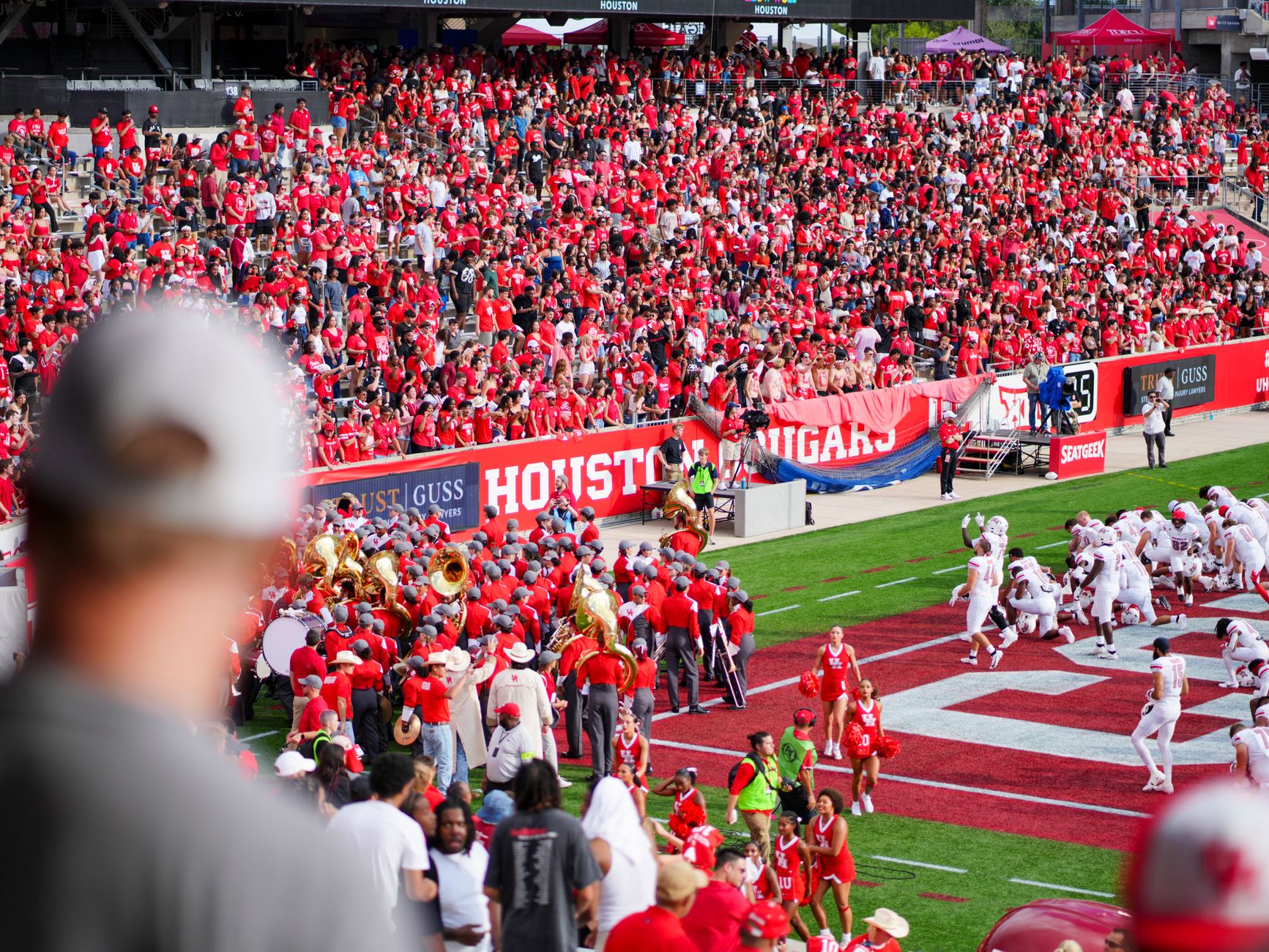
Photo by Photo Eddie O. on Pexels
College football has always felt larger than its arithmetic. On a Saturday afternoon, the stadium becomes a living equation: 22 players, four quarters, thousands of voices, and one probability distribution collapsing play by play. A favorite can dominate the talent chart and still lose because of field position, red-zone failures, or a single tipped pass. That tension is why the sport remains both a cultural ritual and a serious analytical market.
Football Insights approaches college football through a 2026 World Cup-focused lens, emphasizing disciplined research rather than theatrical certainty. Although the brand primarily covers FIFA World Cup match predictions, team tactics, player statistics, and tournament coverage, the same analytical principles translate naturally to NCAA football: identify the underlying numbers, separate signal from noise, and treat every prediction as a calculated risk rather than a prophecy. For historical context, the Wikipedia overview of college football explains how the American and Canadian gridiron traditions developed into today’s collegiate system.
Want a sharper framework before reviewing the weekly slate?
If you are new to college football: start with the competition structure
College football is organized primarily through NCAA divisions, with FBS and FCS representing the two most visible high-level formats. FBS programs compete for bowl eligibility and access to the College Football Playoff, while FCS teams compete in a separate championship tournament and often appear on FBS schedules as non-conference opponents. Conferences such as the ACC, Big Ten, Big 12, SEC, American Athletic Conference, Conference USA, MAC, Mountain West, Sun Belt, and Pac-12 shape scheduling, standings, media rights, and postseason pathways.
The structure matters because a 9–3 record in one conference may carry a different predictive meaning from a 9–3 record elsewhere. Strength of schedule is not a decorative statistic; it changes the expected value of every apparent achievement. A team that has faced three top-15 defenses has revealed more than a team that has accumulated victories against lower-rated opponents, even if the win-loss records look identical under a cold scoreboard.
The NCAA’s official FBS portal, NCAA.com football coverage, tracks scores, rankings, championship history, and major headlines. Its coverage also highlights the importance of the Heisman Trophy race, returning players, transfer additions, and CFP contenders. When researching a game, separate these layers:
- FBS: top-level regular-season football with bowl and CFP implications.
- FCS: a separate NCAA subdivision with its own playoff championship.
- Conference play: games that influence standings and tiebreakers.
- Non-conference play: early tests that often reveal schedule strength.
- Bowl season: postseason games outside the CFP bracket.
- College Football Playoff: the national championship pathway.
A useful contrarian point follows: early-season records are often less informative than early-season performance. In Weeks 1 and 2, a new quarterback, rebuilt offensive line, or first-year defensive coordinator may make last year’s statistics practically obsolete. The expected value of a prediction improves when we weigh personnel continuity and scheme fit alongside historical results.
What does the 2026 college football calendar include?
The 2026 college football calendar begins with Week 1 from August 22 through September 7, continues through Week 15 from December 7 to 12, and then moves into bowl and CFP contests. ESPN lists 15 regular-season weeks, with bowl games scheduled from December 13 through January 27 and CFP activity spanning December 18 through January 27. The national championship is set for January 25, 2027, in Las Vegas.
That calendar creates distinct analytical phases. August and September are laboratories, October is where depth begins to matter, November brings rivalry pressure and conference tiebreakers, and December turns every injury report into a potential market earthquake. The ESPN 2026 college football schedule organizes matchups by week and conference, including broadcast information, venues, tickets, weather, and listed odds.
One operational insight is easy to overlook: the schedule page is not merely a list of kickoff times. It can expose travel, time-zone changes, neutral-site conditions, and compressed preparation. For example, a game played at Aviva Stadium in Dublin, Ireland, creates a fundamentally different travel problem from a familiar home fixture in the United States. A favorite traveling across the Atlantic may possess the stronger roster while losing part of its practical edge through disrupted sleep and reduced routine.

Photo by Hany Nafady on Pexels
If you are comparing teams: measure the matchup, not the logo
The most reliable college football comparison combines efficiency, personnel, environment, and price. Start with success rate and explosive-play rate, then examine third-down conversion, red-zone touchdown percentage, sack rate, rushing efficiency, passing efficiency, and turnover margin. Finally, account for injuries, coaching changes, weather, travel, and whether the betting line has already absorbed the public narrative.
A team’s ranking can be useful, but it is not a complete model. Poll voters and computer systems may reward wins without fully explaining how those wins occurred. A narrow victory over a strong opponent can be more encouraging than a 35-point win against a weak one, especially if the winning team controlled field position and generated consistent first downs.
Here is a practical four-stage comparison:
- Establish baseline quality: review opponent-adjusted offensive and defensive efficiency.
- Test scheme interaction: ask whether the offense attacks the defense’s weakest area.
- Price uncertainty: compare your estimated win probability with the market’s implied probability.
- Audit late information: check injuries, weather, starting lineups, and sharp line movement.
For example, suppose Team A is priced at -6.5 with decimal odds near 1.91 in a standard spread market. If your model gives Team A a 54 percent chance of covering, the estimated edge is not automatically attractive because the break-even probability at 1.91 is approximately 52.36 percent, and model error may be several percentage points. The arithmetic says there may be value; the discipline says the margin must be large enough to survive uncertainty.
This is where [Internal Link: college football betting fundamentals] belongs naturally, because spread pricing, moneyline probability, totals, and bankroll management require different calculations. Never confuse a likely winner with a profitable wager. A team can win 70 percent of the time and still be a poor bet if the price implies 75 percent.
See how the numbers fit together before trusting a headline narrative.
How should you read college football rankings?
College football rankings should be treated as a starting point rather than a final verdict. The AP Top 25, Coaches Poll, CFP rankings, and analytical rating systems may disagree because they weigh wins, opponent quality, margins, recency, and preseason expectations differently. Compare at least two ranking sources and verify whether a team’s position is supported by efficiency data.
Rankings become especially unstable after major transfer movement or quarterback turnover. A highly ranked program can be structurally fragile if it replaces both tackles and its defensive play-caller, while an unranked team with returning starters may improve rapidly. The 2026 coverage from NCAA.com points toward the same reality by emphasizing returning players, Heisman candidates, transfers, and early national-title projections rather than relying solely on the previous season’s table.
A strong research sheet should include:
- Offensive and defensive success rate.
- Explosive plays allowed and created.
- Starting quarterback experience.
- Offensive-line continuity.
- Defensive front pressure rate.
- Red-zone efficiency.
- Turnover luck and fumble recovery rate.
- Rest days and travel distance.
- Weather, altitude, and stadium conditions.
- Market opening line and current line.
One information gain deserves special attention: turnover margin is often unstable from year to year because fumble recoveries contain substantial randomness. Interceptions supported by pressure and tight coverage are more repeatable than a team recovering 80 percent of loose fumbles. Therefore, a club with an extraordinary turnover margin may be less dominant than its record suggests, particularly if its defensive pressure numbers are ordinary.
If you are building a weekly watchlist: prioritize schedule pressure
A weekly college football watchlist should prioritize games where competitive importance and tactical uncertainty intersect. Conference clashes, ranked-versus-ranked meetings, rivalry games, and road tests deserve attention, but the most valuable matchup is often less glamorous: a strong rushing offense facing a defense that has struggled to fit gap assignments, or an inexperienced quarterback confronting a disguised-coverage unit.
The 2026 ESPN schedule includes conference filters for the ACC, American, Big 12, Big Ten, Conference USA, FBS independents, MAC, Mountain West, Pac-12, SEC, Sun Belt, and numerous FCS conferences. That range makes a weekly filter essential. Otherwise, the sheer volume of games becomes an analytical fog, and we mistake availability for relevance.
Build your watchlist in three passes:
- Calendar pass: identify games with short rest, long travel, neutral venues, or unusual kickoff times.
- Performance pass: flag teams with large differences between yards per play and scoreboard results.
- Personnel pass: monitor quarterback status, offensive-line injuries, defensive substitutions, and transfer integration.
A second underappreciated insight concerns international and neutral-site games. Home-field advantage is not a fixed number; it is a bundle of crowd noise, familiar routines, officiating comfort, travel logistics, and communication conditions. In a neutral venue, some of those benefits disappear, but travel burdens may not disappear equally. The correct adjustment is therefore team-specific, not a universal “subtract three points” rule.

Photo by AlphaTradeZone on Pexels
The same framework works for live college football analysis, though the data must be interpreted quickly. A team trailing by 10 points may still be controlling success rate and field position, while a team leading by 10 may be surviving through unsustainable explosive plays. For deeper preparation, consult an [Internal Link: advanced college football statistics guide] and track pregame assumptions separately from in-game evidence.
Want to turn the weekly slate into a focused research board?
Common pitfalls to avoid
The most common college football mistake is treating a prediction as a declaration of identity. Fans want Alabama, Ohio State, Notre Dame, Oregon, Georgia, or another familiar name to mean something permanent, but roster turnover and coaching changes make permanence an illusion. A brand may attract public money long after its underlying matchup advantage has weakened.
Another error is counting every statistic equally. Possession count, total yards, and final score matter, but they can hide pace, starting field position, garbage-time production, and opponent quality. A team that leads 31–7 may produce a misleading late-game defensive profile after backups enter; a team that loses 24–21 may have created more stable offensive success than the result indicates.
Avoid these traps:
- Betting or predicting from rankings alone.
- Ignoring quarterback and offensive-line availability.
- Treating last season’s efficiency as current truth.
- Overvaluing one dramatic rivalry result.
- Chasing a line after the best number has disappeared.
- Confusing a high-scoring game with an efficient offense.
- Assuming every turnover margin is sustainable.
- Using a single weather forecast without checking updates.
- Increasing stakes after a losing result.
Responsible wagering is also part of good analysis. The National Council on Problem Gambling provides education and support resources, while legal requirements vary by U.S. state and jurisdiction. As the NCAA states in its sports wagering guidance, “student-athletes, coaches and staff must not bet on sports.” That institutional boundary matters: analysis should never become pressure, secrecy, or reckless escalation.
Football Insights recommends recording the reason for every position before kickoff. If the reason is only “this team always wins,” the model is not a model; it is nostalgia wearing a jersey. Nostalgia has its place beneath stadium lights, but it should not be allowed to alter the denominator.
If you are reviewing results: what should the 30-day check-in reveal?
A 30-day college football check-in should evaluate process, calibration, and information quality rather than simply counting wins. Review every prediction, the closing line, your estimated probability, the actual result, injury assumptions, and whether the market moved toward or away from your position. A short sample cannot prove forecasting skill, but it can reveal repeated errors such as overrating favorites, ignoring travel, or reacting too strongly to recent scores.
Use a simple audit table:
| Category | Question |
|---|---|
| Probability | Were 60 percent predictions winning near 60 percent over time? |
| Price | Did the available number beat the closing line? |
| Personnel | Were quarterback and line injuries handled correctly? |
| Tactics | Did the matchup thesis appear on the field? |
| Discipline | Did stake size remain consistent? |
| Learning | What assumption changed after the game? |
The key distinction is between outcome quality and decision quality. A bad prediction can win because of a lucky bounce, while a strong prediction can lose after a missed field goal. Over 30 days, the expected value of careful documentation is greater than the emotional value of celebrating one spectacular upset.
Review conference movement, too. The SEC and Big Ten may dominate public attention, but the Big 12, ACC, Mountain West, American Athletic Conference, and FCS programs can produce meaningful tactical and pricing lessons. A model that only watches famous brands suffers from selection bias: it sees the loudest games, not necessarily the most informative ones.

Photo by Maui Media on Pexels
For readers who want to connect gridiron analysis with global tournament forecasting, an [Internal Link: Football Insights match prediction methodology] can provide a useful comparison. Football is not one universal mathematical object: American football has downs, possessions, and high-scoring discrete events, while soccer has continuous territory, low scoring, and draw probability. Yet both reward clear assumptions, opponent adjustment, and honest post-match review.
The 30-day check-in
College football analysis becomes stronger when each week is treated as evidence rather than entertainment alone. Start with the 2026 schedule, classify the conference and venue, inspect efficiency and personnel, compare your probability with the price, and then document what happened without rewriting your original thesis. That sequence turns a crowded Saturday into a repeatable research process.
The grand drama remains intact: the roar at a sold-out stadium, the marching band crossing the tunnel, the quarterback waiting beneath a wall of noise, and the almost unbearable pause before the snap. But beneath that theatre sits a measurable game. Our partnership is simple: keep the passion, remove the blind spots, and let probability do the quiet work while the lights blaze overhead.
For continued analysis, compare official NCAA reporting, ESPN’s live schedule information, injury updates, and Football Insights research rather than relying on one source. The best actionable takeaway is to wait for confirmed personnel news, calculate the implied probability, and stake only when your estimated edge survives a realistic margin of error.
Ready to review the next college football slate with a disciplined edge?
Frequently Asked Questions
Q: What is college football?
A: College football is American gridiron football played by university-affiliated teams under NCAA competition structures. The most prominent level is the FBS, which includes major conferences such as the SEC, Big Ten, ACC, Big 12, and Mountain West. FCS programs compete in a separate NCAA subdivision with a dedicated playoff, although FCS teams may appear on FBS schedules as non-conference opponents.
Q: When does the 2026 college football season start?
A: The 2026 college football season begins during Week 1, scheduled by ESPN from August 22 through September 7. Regular-season weeks continue through Week 15, listed from December 7 to 12, before bowl games and CFP contests begin. Confirm exact kickoff times through ESPN, NCAA.com, and the relevant school because television selections and schedule details can change.
Q: How do I analyze a college football matchup?
A: Analyze a matchup by combining opponent-adjusted efficiency, quarterback performance, offensive-line health, defensive pressure, schedule strength, travel, weather, and market price. Begin with success rate and explosive plays, then study red-zone results and turnover sustainability. Finally, convert the betting price into implied probability and compare it with your own estimate rather than asking only which team is more famous.
Q: What is the difference between FBS and FCS college football?
A: FBS and FCS are separate NCAA football subdivisions with different postseason systems and competitive structures. FBS teams pursue bowl eligibility and College Football Playoff access, while FCS teams compete for an NCAA playoff championship. The distinction matters when comparing records because schedule strength, roster resources, scholarship structures, and postseason pathways are not identical.
Q: Is college football betting worth it?
A: College football betting is worthwhile only when research identifies a genuine price edge and the activity remains legal, controlled, and affordable. A likely winner is not automatically a profitable selection, because the odds may already reflect public opinion and injury information. Compare multiple prices, avoid chasing losses, use consistent stakes, and consult responsible-gambling resources if wagering stops feeling recreational.
Q: Why can a highly ranked college football team lose unexpectedly?
A: A highly ranked team can lose because rankings do not fully capture quarterback form, offensive-line injuries, matchup problems, travel, turnovers, or coaching adjustments. College rosters change quickly through graduation, transfers, and injuries, making preseason reputation an imperfect forecast. A strong team facing a scheme that attacks its defensive weakness may be vulnerable even when the talent gap appears substantial.
Q: What should I check before making a 2026 college football prediction?
A: Check confirmed starters, injury reports, recent opponent-adjusted efficiency, schedule strength, venue, weather, rest, travel, and the current market line before making a 2026 prediction. Compare the opening number with the latest price to identify meaningful movement, but do not assume every move is correct. Record your probability and reasoning in advance so the final score does not rewrite your decision process.