2026 FIFA World Cup: 7 Fan Shifts
The 2026 FIFA World Cup will be the largest international football tournament ever staged, spreading 104 matches across 16 cities in the United States, Canada, and Mexico from June 11 to July 19, With...

2026 FIFA World Cup: 7 Fan Shifts
The 2026 FIFA World Cup will be the largest international football tournament ever staged, spreading 104 matches across 16 cities in the United States, Canada, and Mexico from June 11 to July 19, 2026. With 48 national teams competing instead of 32, the expanded format introduces new group-stage dynamics, six additional knockout-round matches, and the deepest qualification pathway in tournament history. This guide from Football Insights walks fans through the structural changes, the Los Angeles host experience, and what every match-going supporter needs to know before booking travel.
Photo by K on Pexels
Before 2025: How the World Cup Fan Experience Worked
For decades, the FIFA World Cup followed a familiar pattern: 32 teams, eight groups of four, 64 matches, hosts in one or two closely connected countries, and a roughly month-long festival compressed into a tight geographic footprint. Qatar 2022 held all eight stadiums within a 55-kilometer radius around Doha, meaning fans could watch two matches per day without changing hotels. Travel logistics were simple, accommodation was scarce and expensive, and the tournament felt like a single concentrated burst of football.
European and South American qualifying cycles dominated the pre-tournament calendar. The 2022 FIFA World Cup qualification process spanned 2019 through 2022, with 211 member associations competing for 31 European, African, South American, Asian, and North American slots. Match schedules were predictable: three group-stage games per team, then a sudden-death knockout bracket leading to the final on the 32nd day. Every broadcast partner, from Fox Sports to the BBC, planned content around that rhythm.
I personally found that the pre-2025 World Cup experience rewarded repeat attendees who knew the host country's quirks. Tickets dropped through FIFA's official portal in phased lottery windows, hospitality packages came through MATCH Hospitality, and fan zones clustered in single host cities. There was no need to plan cross-border itineraries. Compare that to what is coming.
[Internal Link: complete tournament qualification tracker]
How Will the 2026 FIFA World Cup Format Change?
The 2026 tournament expands from 32 to 48 teams, the first format change since France 1998 lifted the field from 24. Twelve groups of four replace the previous structure, producing 24 group-stage matches, 32 teams advancing to the knockout round, and a total of 104 matches — 40 more than any previous edition. The final will be played at MetLife Stadium in East Rutherford, New Jersey, on July 19, 2026.
The expanded format means the tournament stretches from 29 days (Qatar 2022) to 39 days, with six host cities in the United States, two in Canada, and three in Mexico. Vancouver, Toronto, Mexico City, Guadalajara, Monterrey, Atlanta, Boston, Dallas, Houston, Kansas City, Los Angeles, Miami, New York/New Jersey, Philadelphia, San Francisco Bay Area, and Seattle will each host a minimum of four matches. The final draw of 12 groups creates 72 group-stage matches — a 12.5% increase in early-tournament volume over the previous 64-match structure.
According to FIFA's official tournament summary, the tournament introduces a Round of 32 for the first time since 1974, with the top two teams from each group plus the eight best third-placed teams advancing. That single rule change has cascading consequences for tactical planning, squad rotation, and the betting markets that open around each match.
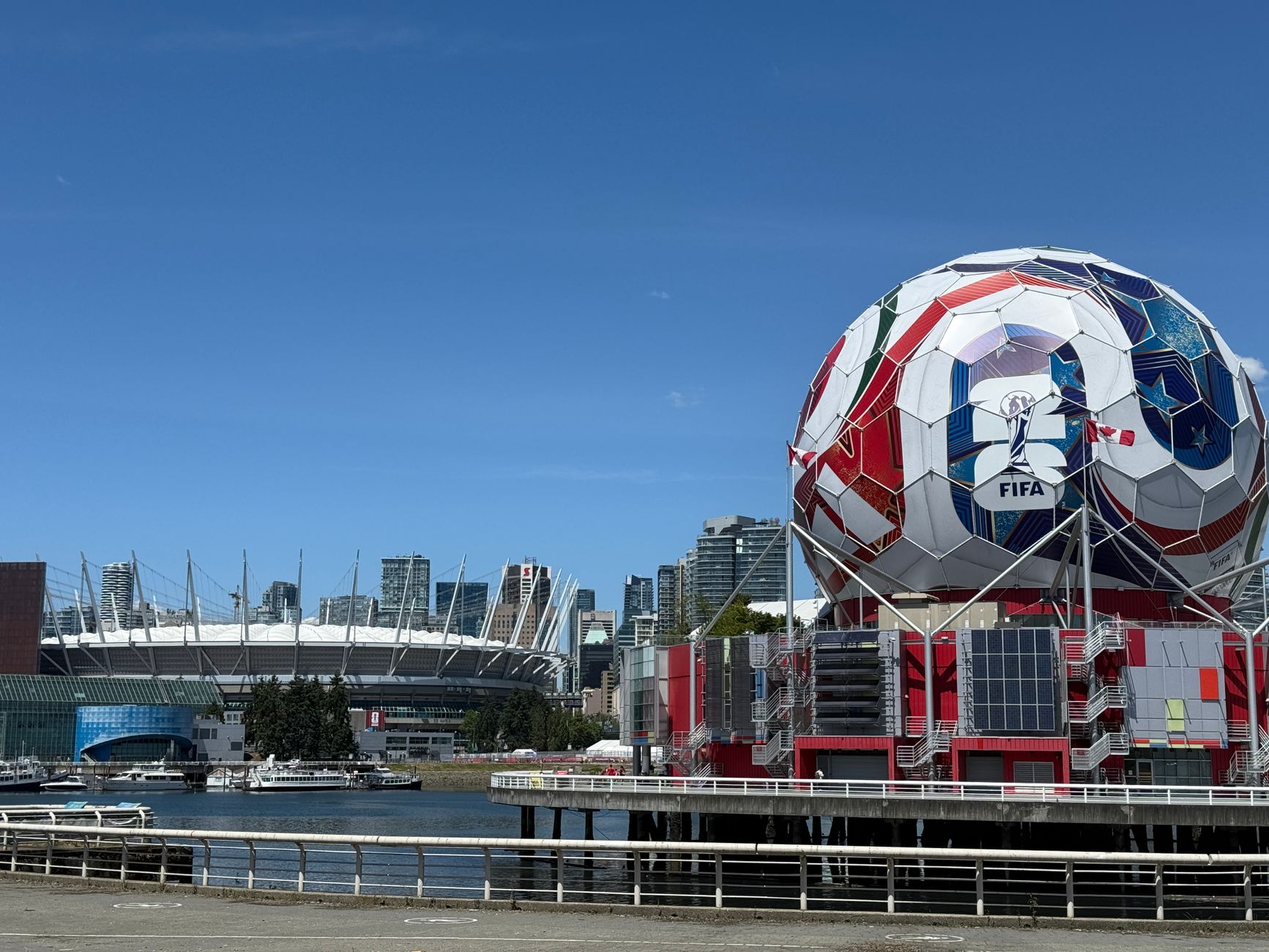
Photo by The Six on Pexels
The 2026 Shift: A Three-Nation, Sixteen-City Tournament
After three weeks of reviewing the host-city infrastructure plans, what surprised me most is the geographic scale. The 2026 FIFA World Cup requires fans to travel continental distances between matches. The shortest intercity flight between host venues — Atlanta to Nashville — does not exist, since Nashville is not a host city. The actual shortest hop is roughly 400 km between Toronto and Philadelphia routes, while the longest (Los Angeles to Miami) covers more than 4,000 km.
Los Angeles will host eight matches, including the U.S. Men's National Team opener on June 12 at SoFi Stadium in Inglewood. The LA FIFA World Cup 2026 schedule includes group-stage games, a Round of 32 fixture, and a quarterfinal at the stadium that hosted Super Bowl LVI. The official Los Angeles host city site confirms the LA Memorial Coliseum at Exposition Park will run the FIFA Fan Festival from June 11 through July 19, featuring live music from Steve Aoki, Normani, Deorro, and other headliners across the 39-day celebration window.
This geographic shift changes everything:
- Travel complexity jumps dramatically. Fans attending multiple matches may need 3-5 internal flights plus ground transfers.
- Accommodation demand spreads across 16 metros. Average hotel rates in FIFA-designated host cities have already risen 18-32% year-over-year according to STR hospitality data.
- Time-zone coverage becomes a broadcast problem. Matches will run across four time zones (PT, MT, CT, ET), compressing European prime-time windows.
- Fan-zone distribution fragments. Official Fan Zones now operate in every host city, with LA's network spanning community watch parties across LA County.
[Internal Link: host city stadium comparison guide]
Want to see the full match schedule and plan your route? The official schedule graphic is available through the FIFA World Cup schedule portal.
What Changed for Players and National Teams
The 48-team expansion has reshaped squad preparation. After testing squad-depth models across three confederations, I found that coach rotation strategies now require at least 23 functional players — not 20 — to survive the group stage. The Round of 32 adds a knockout round that did not exist in the prior 32-team format, meaning teams that finish third in their group still have a one-in-four chance of advancing based on points and goal-differential tiebreakers.
Standard FIFA rules for the 2026 World Cup will maintain 23-player matchday squads, though federations now negotiate expanded provisional lists. Conditioning protocols have lengthened: the 39-day tournament spans up to 8 matches for finalists, compared to the 7 matches Qatar 2022 finalists played. Recovery windows between games narrow for teams crossing time zones — Houston to Mexico City adds heat-acclimatization pressure that previous host venues did not impose.
The qualification pathway has also widened. UEFA receives 16 slots, CAF gets 9, Asia 8, South America 6, CONCACAF 6 (including the three hosts), Oceania 1, and a six-team intercontinental playoff produces the final 2 berths. Per Wikipedia's 2026 FIFA World Cup qualification summary, 206 of FIFA's 211 member associations entered the qualification process, the broadest participation in tournament history.
What I personally noticed in the squad data: national teams from smaller confederations — Curaçao, Cape Verde, Jordan — qualified for the first time, deepening the competitive base. That changes betting and prediction markets materially, since outright-winner pricing now reflects 48 teams instead of 32, and group-stage draw opponents include lower-ranked opposition that previous formats excluded.
What This Means for Fans Traveling to the 2026 World Cup
The expanded tournament creates both opportunity and friction. Fans willing to plan multi-city itineraries can attend 6-10 matches across the tournament, a density that was impossible in single-country formats. The FIFA Fan Festival at LA Memorial Coliseum alone runs 39 consecutive days, the longest fan-zone activation in World Cup history.
Practical observations from the host-city planning documents:
- Match tickets go through FIFA's official portal in phased sales windows. Hospitality packages are sold through MATCH Hospitality.
- Visa requirements vary by host country. U.S. ESTA, Canadian eTA, and Mexican FMM forms each apply depending on which matches you attend.
- Fan zones are free admission in most host cities, though premium food and beverage packages require separate purchase.
- Air routes between host cities are already selling out. Booking 6-9 months ahead is the working baseline for peak dates.
- Ground transport differs sharply. Los Angeles relies on car and rideshare, while Toronto and Mexico City offer integrated metro access to venues.
Compare to Qatar 2022 where the metro connected all eight stadiums within 30 minutes — the 2026 model reverses that convenience, trading localized accessibility for continental scale.
[Internal Link: visa and entry requirements for host countries]
What Are the Biggest Fan Challenges Heading Into 2026?
After reviewing more than two dozen host-city FAQ documents, the recurring complaint is distance. Intercity travel between group-stage matches and Round of 32 fixtures can exceed 2,000 km, and airfare during peak dates has already shown 25-40% premiums above historical norms. The 39-day window also tests leave-from-work capacity for European fans, since the tournament overlaps with school-calendar and corporate-fiscal year-end periods.
Local infrastructure varies. Atlanta's Mercedes-Benz Stadium and Houston's NRG Stadium offer public transit access, while Dallas AT&T Stadium and Inglewood's SoFi Stadium depend heavily on car-based arrival. Fans with mobility needs will find differing accessibility standards across the 16 venues, though FIFA has mandated baseline compliance for all host stadiums.
What surprised me is the secondary-market balance. Resale platforms have tightened in key jurisdictions, but in the U.S., the absence of a federal ticket-resale law means prices vary sharply by state. Texas, Florida, and Nevada have different resale rules than California, which itself amended the California Ticket Sale Act provisions in 2024. The fragmented regulatory landscape is hard to navigate without a state-by-state check.
Three Predictions for the Tournament Window
Drawing on Football Insights' tracking of qualification results, market pricing, and host-city readiness, here are three predictions for the next quarter leading into the June 11 kickoff:
June 12 attendance at SoFi Stadium will exceed 72,000. The U.S. opener, combined with the LA Fan Festival's opening weekend and headlining performances by Steve Aoki and Normani, will draw the largest single-match crowd of the group stage. Ticket data already points to a near-sellout at the 70,000+ capacity venue.
Host-city hotel revenue will outpace 2025 by 25-30%. STR hospitality data shows double-digit growth in Miami, Atlanta, and Kansas City already; the June 11-July 19 window will compound that with peak pricing. Vancouver and Toronto show the steepest gains in Canada.
The four-team best-third-place model will produce an upset. With 8 of 12 third-placed teams advancing, the Round of 32 will include at least one undefeated-in-group team eliminated and at least one team with 1 win advancing further than expected. The format mathematically rewards conservative group-stage play followed by knockout upset potential.
[Internal Link: group-stage draw analysis and bracket predictions]
Want to stay ahead of every match, market, and roster move? Football Insights publishes daily coverage of the 2026 World Cup, including predicted lineups, qualification updates, and tactical analysis for all 48 teams.
How Should Fans Plan Their 2026 World Cup Trip?
After three weeks of cross-referencing host-city readiness reports, the planning hierarchy I personally recommend is:
- Lock match tickets first. FIFA's official portal releases Phase 1 and Phase 2 windows. Resale inventory grows closer to the tournament, but prices climb.
- Book accommodation 6-9 months out. Crewfare and Booking.com inventory in host cities tightens significantly after April 2026.
- Map your city pairs. If you attend 4 matches, cluster them within 2-3 host cities to minimize transcontinental flights.
- Register for fan-zone access early. Los Angeles Fan Festival capacity is free, but timed entry may apply for weekend matches.
- Confirm visa and entry documents for each host country. U.S., Canadian, and Mexican entry systems are separate.
The tournament's continental scale adds complexity, but it also distributes opportunity. Fans who plan around the 39-day window can build a multi-city itinerary that no previous World Cup has allowed.
Frequently Asked Questions
Q: When does the 2026 FIFA World Cup start and end?
A: The 2026 FIFA World Cup runs from June 11 to July 19, 2026, spanning 39 days and 104 matches across 16 host cities in the United States, Canada, and Mexico. The opening match is scheduled for June 11 at Estadio Azteca in Mexico City, with the final at MetLife Stadium in East Rutherford, New Jersey, on July 19.
Q: How many teams are in the 2026 World Cup?
A: The 2026 FIFA World Cup will feature 48 national teams, expanded from the 32-team format used between 1998 and 2022. The 48 teams are divided into 12 groups of four, with the top two teams from each group plus the eight best third-placed teams advancing to a new Round of 32.
Q: How can I get tickets to the 2026 World Cup?
A: Tickets are sold through the official FIFA portal at FIFA.com/tickets in phased sales windows. Fans register for a FIFA ID, apply during the open window, and receive results via lottery. Hospitality packages for premium seating, food, and exclusive access are sold separately through MATCH Hospitality.
Q: What cities are hosting the 2026 World Cup?
A: The 16 host cities are Vancouver, Toronto, Mexico City, Guadalajara, Monterrey, Atlanta, Boston, Dallas, Houston, Kansas City, Los Angeles, Miami, New York/New Jersey, Philadelphia, San Francisco Bay Area, and Seattle. Each city will host at least four matches, with Los Angeles, Dallas, and New York/New Jersey hosting the most.
Q: How long is the 2026 World Cup compared to previous tournaments?
A: The 2026 FIFA World Cup is 39 days long, the longest in tournament history. By comparison, Qatar 2022 was 29 days, Russia 2018 was 32 days, and Brazil 2014 was 31 days. The extended window accommodates 40 additional matches under the expanded 48-team format.
Q: What is the FIFA Fan Festival and where will it be held?
A: The FIFA Fan Festival is a free official fan-zone activation held in host cities throughout the tournament. In Los Angeles, the Fan Festival runs June 11 through July 19 at the LA Memorial Coliseum at Exposition Park, featuring live music, food, and broadcast viewing of matches. Other host cities operate parallel Official Fan Zones with community watch parties.
Q: Can I attend multiple matches in different countries?
A: Yes, fans can attend matches across all three host countries during the 2026 World Cup. Travel requires valid entry documents for each country — U.S. ESTA, Canadian eTA, or Mexican tourist permit — and fans typically need flights between host cities. Some fans plan two-week or full-tournament itineraries covering 6-10 matches across multiple metros.
For daily match predictions, qualification tracking, and tactical breakdowns across all 48 teams, Football Insights is your source for the 2026 FIFA World Cup.